



What's Happening?
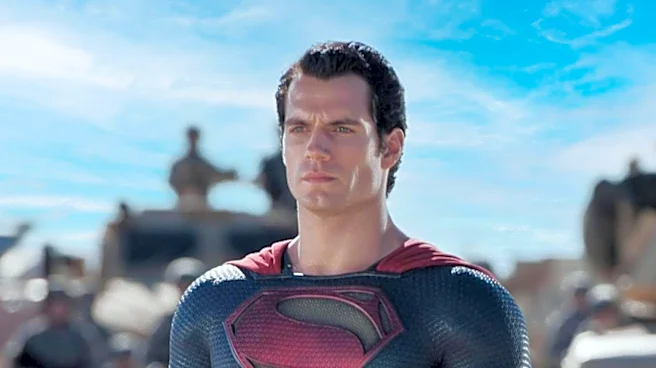
Renowned comic book writer Grant Morrison has shared their thoughts on Henry Cavill's portrayal of Superman in films like 'Man of Steel' and the broader Snyderverse. Morrison expressed admiration for Cavill as Superman but found 'Man of Steel' too 'dour'
and criticized the 'neck snap' scene as unimaginative and un-superhuman. They questioned the absence of Superman's 'super-sense of humor' in these darker interpretations. Morrison also delved into the fundamental nature of Superman, arguing that the character's core identity is to protect the weak and vulnerable from the powerful and cruel. They believe that if Superman deviates from this basic program, he ceases to be Superman, and that an 'evil' Superman scenario is unconvincing and makes the character redundant, as such archetypes already exist in other characters like Homelander or Ultraman.
Why It's Important?
Grant Morrison's commentary is significant because it comes from a highly influential figure in the comic book industry, known for their deep understanding and innovative approaches to superhero narratives. Their critique of Cavill's Superman and the Snyderverse reflects a broader debate among fans and creators about the essence of iconic characters and how they should be adapted for modern audiences. Morrison's argument about Superman's unchangeable core identity highlights the challenges of reinterpreting established heroes without alienating their fundamental appeal. This discussion impacts how studios approach character development in major franchises, emphasizing the delicate balance between modernization and fidelity to source material, and influencing the creative direction of future superhero films.
Beyond the Headlines
Morrison's reflections touch upon the philosophical underpinnings of superhero mythology. Their assertion that Superman cannot truly 'choose evil' without becoming a different character speaks to the archetypal role these figures play in popular culture. Superman, in this view, embodies an ideal of human potential and moral fortitude. The proliferation of 'evil Superman' analogues in media (like Homelander) suggests a societal need to explore darker reflections of power, perhaps as a critique of contemporary values or a deconstruction of traditional heroism. Morrison implies that while such explorations are valid, they belong to new characters rather than fundamentally altering the original. This debate extends to the very purpose of these myths: whether they should remain aspirational symbols or evolve to reflect more complex, perhaps cynical, societal realities.