







What's Happening?
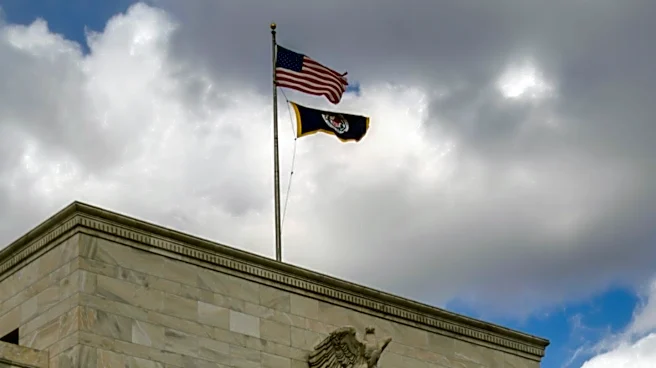
Gold prices have fallen to their lowest in over seven months, driven by expectations of a U.S. Federal Reserve interest rate hike. Spot gold decreased by 0.5% to $3,982.49 an ounce, while U.S. gold futures for August delivery dropped 0.3% to $3,997.60
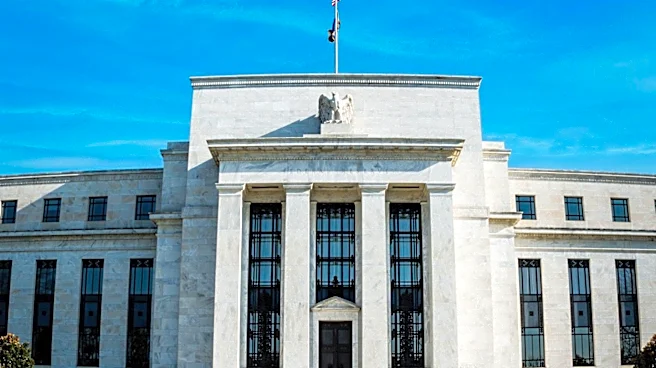
per ounce. This decline is part of a broader trend, with gold losing more than 6% since the Federal Reserve's recent meeting. The U.S. dollar has strengthened to its highest level in over 13 months, making dollar-priced metals more expensive for holders of other currencies. Market data from CME FedWatch indicates a 66% probability of a rate hike in September. Analysts attribute the decline in gold prices to the Federal Reserve's hawkish stance, which has led to a repricing of rate hike expectations. Additionally, outflows from gold ETFs and a shift towards equities, spurred by the AI boom, are contributing to the downward pressure on gold.
Why It's Important?
The decline in gold prices reflects broader economic trends and investor sentiment regarding U.S. monetary policy. A potential rate hike by the Federal Reserve could have significant implications for various sectors, including commodities and foreign exchange markets. A stronger dollar typically makes U.S. exports more expensive and can impact global trade dynamics. For investors, the shift from gold to equities suggests a changing risk appetite, possibly influenced by technological advancements and economic recovery expectations. The situation also highlights the cyclical nature of commodity markets, where external factors such as monetary policy and technological trends can drive significant price movements.
What's Next?
Investors are closely monitoring upcoming U.S. economic data, particularly the Personal Consumption Expenditures (PCE) index, which is the Federal Reserve's preferred measure of inflation. This data could provide further insights into the Fed's monetary policy direction. If inflation remains high, it could reinforce expectations of a rate hike, potentially leading to further strengthening of the dollar and continued pressure on gold prices. Conversely, if inflation data is weaker than expected, it might ease some of the pressure on gold. Additionally, geopolitical developments, such as the U.S.-backed plan for Israeli forces to hand over territory to the Lebanese army, could also influence market dynamics.