


What's Happening?
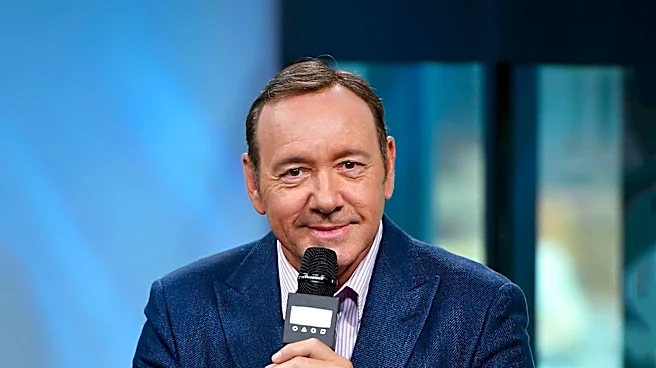
Kevin Spacey's career, once celebrated for iconic roles in films like "American Beauty," "Basic Instinct," and "The Usual Suspects," has been significantly impacted by multiple allegations of misconduct and assault that emerged in 2017. These allegations led
to a global cultural controversy, resulting in his blacklisting from the entertainment industry and the disruption of ongoing projects. Films he directed, such as "The Kid," faced re-editing and delayed distribution, while his role in "Babylon" was substantially reduced. Collaborations with producers and cinematographers were terminated or restructured, reshaping his cinematic trajectory. Spacey's filmography, which includes an Academy Award-winning performance, is now viewed through a lens altered by these events, highlighting a duality between his on-screen brilliance and the profound personal and professional upheaval he has faced.
Why It's Important?
The fallout from the allegations against Kevin Spacey underscores a significant shift in the entertainment industry's approach to accountability and ethical standards. His blacklisting and the subsequent disruption of his projects demonstrate the immediate and extensive consequences that can arise from such controversies, impacting not only individual careers but also production timelines and creative decisions across Hollywood. This situation highlights the tension between artistic legacy and contemporary ethical expectations, forcing the industry to confront questions of morality and the potential for narrative forgiveness. The recalibration of Spacey's career reflects a broader movement toward greater accountability, challenging traditional norms of performance preservation and influencing how the public and industry perceive artists involved in such scandals. This ongoing discussion shapes how future talent is vetted and how past works are re-evaluated.
What's Next?
In the wake of the allegations, Kevin Spacey's presence in new films has been significantly reduced, primarily appearing in archival or indirect connections. While no formal 'retirement' has been announced, his career trajectory has been redefined, shifting from leading roles to behind-the-scenes involvement and selective cameos where risk is minimized. This recalibration signals a repositioned legacy rather than an erased one. The entertainment industry continues to adapt to these changes, with emerging narratives focusing more on systemic change within Hollywood's creative apparatus. Spacey's story serves as a benchmark for how both art and actors must evolve in a changing cultural landscape, prompting ongoing conversations about redemption, representation, and the future of talent in an era of increased scrutiny and accountability.
Beyond the Headlines
The case of Kevin Spacey delves into the complex ethical and cultural dimensions of separating the artist from their art. While his performances are widely recognized for their psychological nuance and narrative innovation, their reception is now inextricably linked to his personal conduct. This situation has sparked critical discussions among scholars and the public about how to contextualize and interpret the works of individuals facing serious allegations. It raises questions about whether artistic merit can be divorced from an artist's moral standing and how society grapples with the legacy of those whose personal lives contradict their public image. The industry's response to Spacey's situation reflects a broader societal shift towards greater accountability, potentially influencing how historical and contemporary works are viewed and how future generations of artists are evaluated, fostering a more critical engagement with the ethical implications of creative production.