






What's Happening?
The Pittsburgh Penguins are currently experiencing a challenging start to their season, holding a 5-7-2 record through their first 14 games, placing them sixth in the Metropolitan Division. This performance puts them 14th out of 16 teams in the Eastern
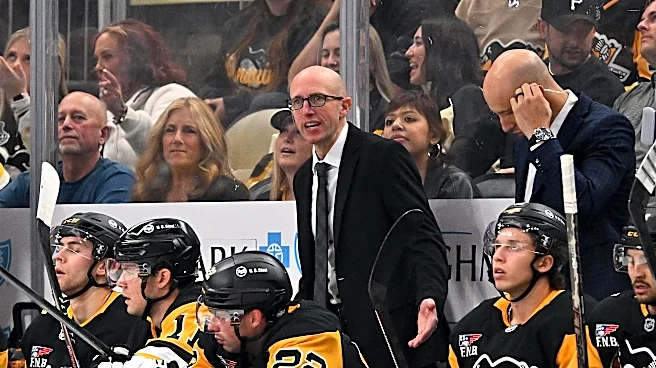
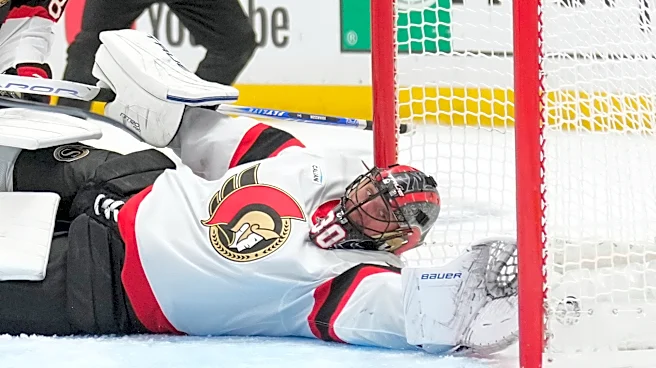
Conference. The team has been plagued by inconsistent goaltending and a lack of offensive finishing, frequently surrendering four to five goals per game outside of a brief three-game stretch in late October where they only allowed six total goals. Coach Dan Muse has acknowledged the team's defensive lapses and repeated mistakes, stating that while errors are part of hockey, the frequency of breakdowns and multiple scoring chances against is too high and needs correction. The team's current standing with only 12 points in 14 games puts them significantly below the playoff line, with teams like Buffalo holding a .607 points percentage and 17 points in the same number of games.
Why It's Important?
The Pittsburgh Penguins' early-season struggles are significant for several reasons. For the franchise, a continued poor performance could necessitate a strategic shift, potentially moving towards a rebuild rather than attempting to contend with the current roster. This would impact veteran players and future team construction. For fans, the team's inability to secure wins and consistent play leads to growing frustration and concerns about the team's direction. Economically, a struggling team can affect ticket sales, merchandise revenue, and local business engagement tied to game nights. The team's current trajectory suggests they are unlikely to be contenders, which could have broader implications for the NHL's competitive landscape, especially given the Penguins' historical success and star power. The need for 'significant changes' as acknowledged by the team indicates a potential period of instability and transition.
What's Next?
The immediate future for the Pittsburgh Penguins will likely involve continued efforts to address their on-ice issues, particularly in goaltending and defensive consistency. Coach Dan Muse may implement lineup changes and more rigorous practices to try and rectify the recurring problems. Given the team's current standing, there could be increased pressure on management to make roster adjustments, potentially through trades, if performance does not improve. The team's acknowledgment of the need for 'significant changes' suggests that a more substantial overhaul might be considered if they continue to fall behind in the standings. This could involve evaluating the long-term roles of key players and considering a shift towards integrating more youth into the lineup, signaling a potential rebuild in the coming months.
Beyond the Headlines
The Penguins' current predicament extends beyond mere win-loss records, touching upon the broader narrative of aging dynasties in professional sports. With a core group of veteran players who have achieved significant success, the team faces the difficult decision of when and how to transition to a new era. This situation highlights the cyclical nature of sports, where even historically dominant teams eventually face periods of decline and rebuilding. The challenge for the Penguins' management is to navigate this transition while maintaining fan engagement and financial viability. Ethically, there's a balance between loyalty to long-serving players and the strategic imperative to build a competitive future. The team's struggles could also influence league-wide perceptions of player longevity and the effectiveness of retaining veteran talent versus investing in younger prospects.