






What's Happening?
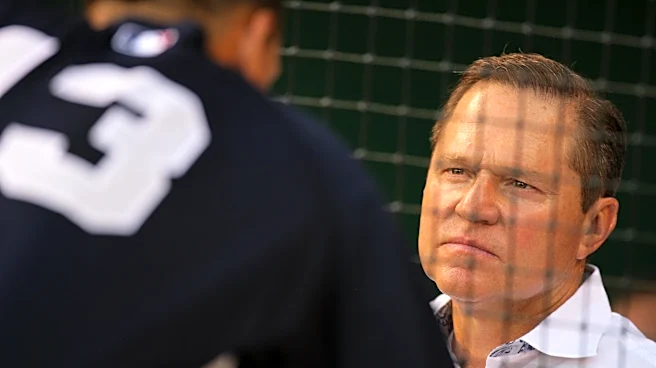
Ken Kendrick, owner of the Arizona Diamondbacks, has expressed a desire to reduce the team's payroll. Despite this, the team is not expected to implement a drastic reduction in spending. Kendrick has a history of investing in quality players to maintain
the team's competitive edge. While outbidding larger market teams like the Yankees for high-caliber players such as Bednar might be challenging, it is not considered impossible. The possibility of a new Collective Bargaining Agreement introducing a salary floor could also impact Kendrick's ability to significantly trim payroll, potentially leading to spending levels comparable to previous years.
Why It's Important?
This situation highlights the ongoing tension between financial management and competitive aspirations in professional sports. For the Arizona Diamondbacks, a moderate approach to payroll reduction means they can still pursue talented players, which is crucial for fan engagement and on-field success. A significant cut could alienate fans and diminish the team's ability to compete in a league where financial power often dictates player acquisition. The potential for a salary floor in the Collective Bargaining Agreement is a critical factor, as it could mandate a minimum spending level, forcing owners like Kendrick to maintain or even increase payrolls regardless of their personal preferences. This could level the playing field to some extent, benefiting smaller market teams by ensuring a baseline investment in talent.
What's Next?
The Diamondbacks' approach to the upcoming free agency period will be closely watched. Decisions regarding player acquisitions and contract negotiations will reveal the extent to which Ken Kendrick's desire to trim payroll will be balanced against the team's commitment to competitiveness. The ongoing discussions around a new Collective Bargaining Agreement and the potential inclusion of a salary floor will also be a significant factor. If a salary floor is implemented, it could alter the team's financial strategy, potentially leading to more aggressive spending on players than initially anticipated. Fans and analysts will be looking for signs of strategic investment in key positions to ensure the team remains a contender.
Beyond the Headlines
The dynamic between team ownership's financial goals and the competitive demands of professional baseball reflects broader economic trends in sports. Owners often face pressure to maximize profits while simultaneously delivering a winning product to their fanbase. This balancing act can lead to complex decisions regarding player salaries, trades, and long-term team building. The discussion around a salary floor also touches upon the league's efforts to promote competitive balance, ensuring that financial disparities among teams do not completely dictate on-field outcomes. This ongoing debate has implications for player salaries, team valuations, and the overall health of the sport, as it seeks to maintain both economic viability and fan interest.