





What's Happening?
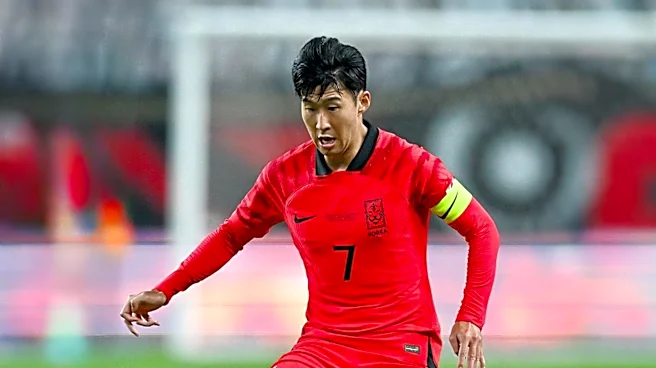
South Korean professional footballers are calling for stronger protections against extreme heat following a survey conducted by the Korea Pro-Footballers Association (KPFA). The survey, which included 536 players from South Korea’s K League and WK League,
revealed that 86.2% experienced significant physical strain while playing in temperatures exceeding 40 degrees Celsius (104 degrees Fahrenheit). Key health issues reported by players included dizziness (64.7%), severe dehydration (56.6%), and temporary lapses in consciousness (13%). KPFA President Lee Keun-ho highlighted these findings as a "glaring red flag," emphasizing the need for improved safety measures. The union is urging the Korea Football Association (KFA), K League, and WK League to implement mandatory heat protocols, as current safeguards are deemed insufficient to protect players adequately.
Why It's Important?
This initiative by South Korean footballers underscores a growing global concern regarding athlete safety in extreme weather conditions, a topic that has implications for sports organizations worldwide, including those in the U.S. The findings highlight the direct health risks faced by athletes, which can lead to serious medical incidents and long-term health complications. For U.S. sports leagues, particularly those with outdoor events during summer months, this serves as a critical case study on the necessity of robust heat safety protocols. The push for mandatory protocols, including adjusting match schedules, enforcing cooling breaks, and potentially postponing or canceling games, could influence similar discussions and policy changes in American sports. Ensuring player well-being is paramount not only for ethical reasons but also for maintaining the integrity and sustainability of professional sports, as player health issues can impact team performance, fan engagement, and league reputation.
What's Next?
The KPFA is urging the Korea Football Association (KFA), K League, and WK League to introduce mandatory heat protocols. The KFA has acknowledged these concerns, stating that player health and safety are their "absolute top priority" and that they are taking steps to reduce heat-related risks, such as adjusting match schedules and enforcing cooling-break protocols. However, nearly half of the surveyed players expressed dissatisfaction with the current cooling-break system, which typically offers only a three-minute break. The union also advocates for a broader discussion on South Korea’s football calendar, with many players supporting a switch to an autumn-spring schedule to avoid the hottest months. Women players, in particular, face additional challenges, often playing on artificial surfaces during peak heat without adequate air-conditioned facilities, prompting calls for more equitable safety measures.
Beyond the Headlines
The situation in South Korean football reflects a broader ethical and logistical challenge facing sports globally due to climate change. As extreme weather events become more frequent, sports organizations are increasingly confronted with the responsibility to prioritize athlete welfare over traditional scheduling and commercial interests. This extends beyond football to other outdoor sports in the U.S., where heat-related illnesses are a significant concern. The debate over mandatory heat protocols and calendar adjustments highlights a tension between established practices and the evolving realities of environmental conditions. It also brings to light potential legal implications for leagues and associations if they fail to adequately protect athletes from foreseeable harm. The KPFA's advocacy could set a precedent for player unions worldwide to demand more stringent health and safety standards, potentially leading to a re-evaluation of how professional sports adapt to a changing climate.