






What's Happening?
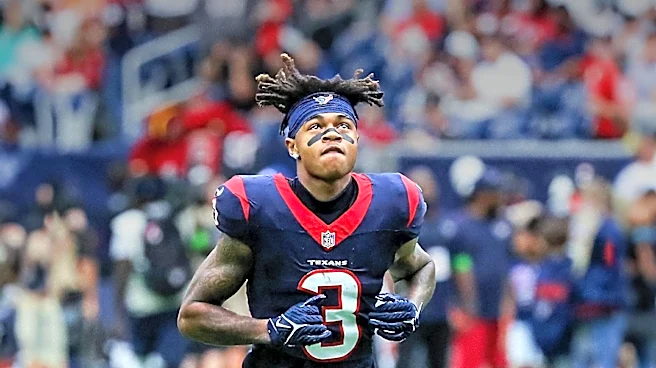
The Houston Texans are currently considered the leading team in ongoing trade discussions for Arizona Cardinals wide receiver Marvin Harrison Jr. According to ESPN's Jeremy Fowler, many analysts and executives believe Houston is the likely destination
for Harrison Jr. The Texans' interest reportedly includes offering a future second-round pick. However, the trade is not yet finalized, and other teams, specifically the Las Vegas Raiders and Los Angeles Chargers, have also been mentioned as potential suitors. KPRC2's Aaron Wilson indicates that while the Texans have generated the most buzz, the Cardinals are exploring all possible trade offers before making a final decision. Harrison Jr. has been ruled inactive for the Cardinals' Week 5 game against the Detroit Lions, suggesting a trade could be imminent. The Texans' appeal is further enhanced by their need for a wide receiver alongside Nico Collins and the presence of Harrison Jr.'s former Ohio State quarterback, C.J. Stroud, on their roster.
Why It's Important?
This potential trade holds significant implications for the Houston Texans, as acquiring a talent like Marvin Harrison Jr. could substantially elevate their offensive capabilities and overall competitiveness in the NFL. For the Texans, adding a top-tier wide receiver would provide a crucial weapon for quarterback C.J. Stroud, potentially accelerating the team's development and improving their chances of making a playoff push. The move would also signal a strong commitment from the Texans' front office to build a winning team around their young quarterback. For the Arizona Cardinals, trading Harrison Jr. would allow them to acquire valuable draft capital, specifically a second-round pick, which they could use to rebuild their roster. The involvement of other teams like the Raiders and Chargers highlights the high demand for elite receiving talent in the league, indicating that teams are willing to invest significant assets to secure such players. The outcome of these trade talks could shift the competitive landscape within the AFC, particularly for the teams involved.
What's Next?
Clarity on the Marvin Harrison Jr. trade situation is expected to emerge by the end of Sunday's Week 5 NFL slate. The Arizona Cardinals are actively exploring all potential trade offers, meaning the Texans' current frontrunner status could still be challenged if another team, such as the Las Vegas Raiders or Los Angeles Chargers, presents a more compelling package. Previous reports indicated the Cardinals sought a second-round pick and additional compensation from the Indianapolis Colts, which led to the Colts withdrawing from discussions. Therefore, any team looking to acquire Harrison Jr. will likely need to meet or exceed this valuation. If the Texans successfully acquire Harrison Jr., he could be on their roster as early as Week 6, significantly impacting their offensive strategy. Conversely, if another team outbids the Texans, it would force Houston to re-evaluate its wide receiver needs and potentially pursue other options in the trade market or upcoming draft.
Beyond the Headlines
The pursuit of Marvin Harrison Jr. underscores a broader trend in the NFL where elite wide receivers are increasingly viewed as cornerstone pieces for offensive success, commanding significant trade value and salary. This situation also highlights the strategic importance of draft capital, as teams like the Cardinals are leveraging high-value players to acquire future assets for long-term roster building. The potential reunion of Harrison Jr. with his college quarterback, C.J. Stroud, on the Texans would exemplify the growing emphasis on quarterback-receiver chemistry, which can be a critical factor in a team's offensive efficiency. Furthermore, the competitive bidding among multiple teams for a single player reflects the league's dynamic trade market, where teams are constantly looking for opportunities to gain a competitive edge. This scenario also touches upon the ethical considerations of trading players who are still under contract, as teams balance player desires with organizational needs and financial implications.