








What's Happening?
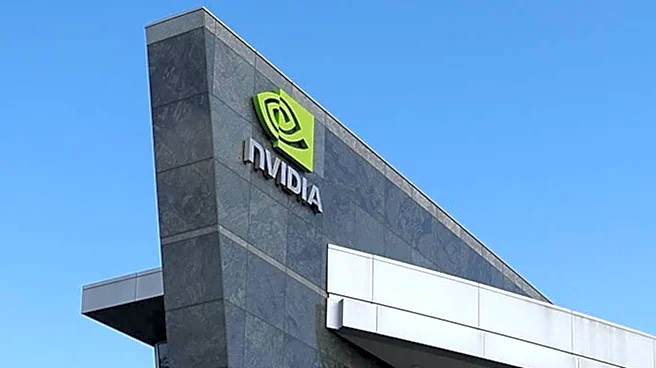
Bristol Myers Squibb (BMS) has announced a partnership with NVIDIA to develop a new AI supercomputing infrastructure. This collaboration involves the deployment of NVIDIA's DGX SuperPOD, based on the Vera Rubin NVL72 system, which is designed for complex
AI workflows and scientific computing. The system aims to enhance computational power and efficiency in life sciences, allowing BMS to scale AI models, reduce drug discovery timelines, and advance its 'hybrid intelligence' vision. This infrastructure is expected to operate with significantly higher performance per megawatt compared to previous systems, enabling BMS to handle larger AI workloads without a proportional increase in energy consumption.
Why It's Important?
The partnership between BMS and NVIDIA highlights the growing importance of AI in the pharmaceutical industry. By leveraging advanced AI infrastructure, BMS aims to improve drug discovery processes, reduce costs, and increase success rates. The ability to process large datasets and generate predictive models can significantly shorten the time required for lead candidate selection and drug design. This development positions BMS at the forefront of AI-driven drug discovery, potentially giving it a competitive edge in the industry. The collaboration also underscores the broader trend of integrating AI into various sectors to enhance efficiency and innovation.
What's Next?
As BMS continues to integrate AI into its operations, the company is likely to see further advancements in its drug discovery pipeline. The enhanced computational capabilities provided by NVIDIA's infrastructure will enable BMS to pursue more sophisticated AI projects, potentially leading to breakthroughs in medicine. Other pharmaceutical companies may follow suit, increasing investments in AI to remain competitive. The success of this partnership could also influence regulatory policies and industry standards related to AI in drug development.