







What's Happening?
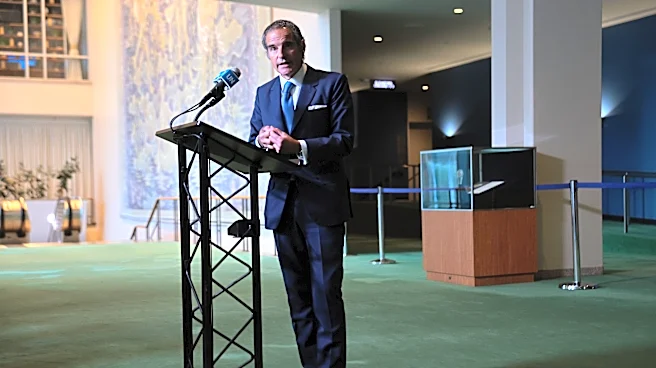
The United Nations Forum on Business and Human Rights is scheduled to hold its 15th session from November 23-25, 2026, at the United Nations Office in Geneva. This year's forum will specifically focus on the UN Guiding Principles on Business and Human Rights (UNGPs),
commemorating 15 years since their endorsement by the United Nations Human Rights Council. The event aims to serve as a multi-stakeholder platform, bringing together various parties to assess the progress and persistent challenges in the application and implementation of the UNGPs by both states and businesses. Discussions will also cover the effectiveness of providing access to remedies for rights holders over the past decade and a half.
Why It's Important?
This forum is significant for U.S. businesses and policymakers as it provides a critical platform for evaluating global standards on corporate responsibility and human rights. The UNGPs, which outline the responsibilities of states and businesses to prevent, address, and remedy human rights abuses linked to business operations, directly impact how U.S. companies operate internationally. The discussions will highlight best practices and identify areas where implementation has fallen short, potentially leading to new recommendations or stricter enforcement mechanisms. For U.S. companies with global supply chains and operations, understanding and adhering to these principles is crucial for mitigating legal, reputational, and financial risks. The forum's focus on access to effective remedies for rights holders also emphasizes the growing demand for corporate accountability and could influence future U.S. regulations or corporate governance standards related to human rights.
What's Next?
The outcomes of the 15th session could lead to renewed calls for stronger national action plans on business and human rights, increased corporate due diligence requirements, and enhanced access to justice for victims of business-related human rights abuses. U.S. businesses may face pressure to align their practices more closely with the UNGPs, potentially requiring adjustments to their operational policies, supply chain management, and grievance mechanisms. The discussions could also inform future policy debates within the U.S. government regarding corporate social responsibility and human rights, possibly influencing trade agreements, investment policies, and regulatory frameworks. Furthermore, the forum's findings might encourage greater collaboration between governments, businesses, and civil society organizations to address complex human rights challenges in a globalized economy.
Beyond the Headlines
The ongoing dialogue at the UN Forum on Business and Human Rights reflects a broader societal shift towards holding corporations accountable for their human rights impacts. Beyond legal and regulatory compliance, there's a growing expectation from consumers, investors, and civil society for businesses to demonstrate ethical conduct and contribute positively to society. This forum underscores the evolving understanding of corporate responsibility, moving beyond traditional philanthropy to encompass a proactive approach to preventing harm and ensuring respect for human rights throughout value chains. For U.S. businesses, this means that 'doing good' is increasingly intertwined with 'doing well,' as ethical performance becomes a key factor in brand reputation, investor confidence, and long-term sustainability. The discussions also highlight the complex interplay between state obligations and corporate responsibilities, emphasizing that both have distinct yet complementary roles in upholding human rights in a globalized world.