



What's Happening?
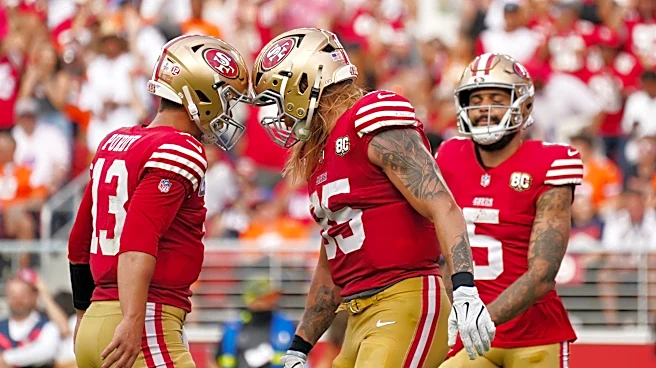
Colin Kaepernick has alleged that the San Francisco 49ers were intentionally 'tanking' during his final season with the team in 2016. In his memoir, 'The Perilous Fight,' Kaepernick claims the team showed little interest in winning football games and
did not adequately build a competitive roster. He specifically noted that the 49ers, despite having approximately $40 million in salary cap space, failed to acquire another wide receiver, a move he believes was crucial for the team's success. Kaepernick stated that the team referred to Chip Kelly's first season as a 'rebuilding' year, but in reality, they had no plan to secure the talent Kelly desired. This accusation suggests a deliberate strategy by the 49ers to underperform, potentially to secure better draft picks, rather than genuinely compete for victories. The team's lack of spending in free agency in both 2015 and 2016 has also been cited by Niners Nation as evidence supporting Kaepernick's claims, further questioning the team's intentions during that period.
Why It's Important?
Kaepernick's accusations are significant as they challenge the integrity of professional sports and raise questions about team management practices in the NFL. If true, the deliberate 'tanking' of a season undermines the competitive spirit of the league and could erode fan trust. Such a strategy prioritizes future draft capital over current performance, potentially impacting player morale, coaching staff stability, and the overall fan experience. For players like Kaepernick, who were actively trying to win, these alleged actions represent a betrayal of their professional commitment and effort. The implications extend beyond the 49ers, as similar allegations in other sports leagues have led to investigations and penalties, highlighting the importance of maintaining fair play and competitive balance. This situation also brings to light the power dynamics between team ownership, management, and players, and how strategic decisions can affect individual careers and the broader perception of the sport.
What's Next?
While Kaepernick's memoir brings these allegations to light, the immediate next steps are unclear given the passage of time since the 2016 season. It is unlikely that the NFL will launch a formal investigation based solely on a memoir, but the claims could prompt further discussion and scrutiny within sports media and among former players. The 49ers organization may choose to issue a statement in response to the allegations, though they are not obligated to do so. For Kaepernick, these revelations are part of his ongoing narrative regarding his NFL career and his activism. The claims could also influence public perception of the 49ers' management during that era and potentially impact how future team-building strategies are viewed by fans and analysts. The broader conversation about 'tanking' in professional sports may also gain renewed attention, potentially leading to discussions about league policies and safeguards to prevent such practices.
Beyond the Headlines
The allegations of 'tanking' touch upon deeper ethical and economic considerations within professional sports. Ethically, it raises questions about the responsibility of team owners and management to their players, fans, and the league itself. Is it acceptable for a team to intentionally lose games for long-term strategic benefits, even if it means sacrificing the current season's competitiveness? Economically, 'tanking' can be seen as a rational, albeit controversial, strategy in leagues with draft systems that reward poorer performance with higher draft picks. This creates an incentive structure that can conflict with the immediate goal of winning. The controversy also highlights the often-opaque decision-making processes within sports franchises and the limited transparency available to players and the public. The long-term impact on player careers, particularly for those who may be unfairly judged during a 'tanking' season, is another significant, less obvious implication.