





What's Happening?
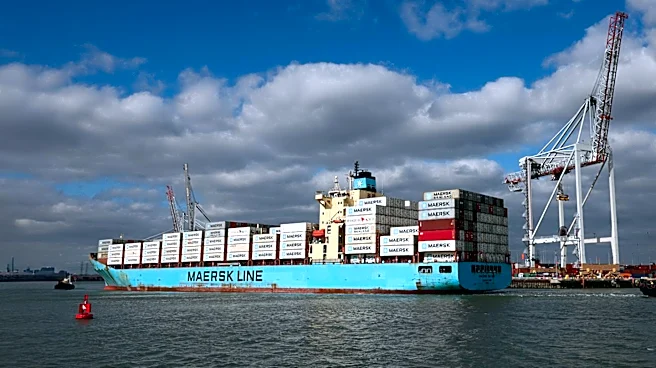
Maersk has announced the implementation of a new surcharge for refrigerated containers carrying meat products exported from Nicaragua, effective September 21st, 2026. This surcharge, termed 'Additional Service Export' (ASE), is in response to a new government-mandated
ozone treatment requirement by Nicaraguan authorities. As of September 1st, 2026, all affected shipments must undergo ozone treatment performed by the Organismo Internacional Regional de Sanidad Agropecuaria (OIRSA) and be accompanied by a valid OIRSA-issued Ozone Treatment Certificate and official government seal to be authorized for loading. Maersk states that for trades subject to the U.S. Shipping Act, quotations or surcharges varying from its tariff are not binding unless included in a service contract or amendment filed with the Federal Maritime Commission (FMC).
Why It's Important?
This development is significant for U.S. businesses involved in importing meat products from Nicaragua, as it directly impacts their shipping costs and logistical processes. The new surcharge will increase the overall cost of goods, potentially affecting consumer prices and the competitiveness of Nicaraguan meat in the U.S. market. For Maersk, the implementation of this surcharge is a measure to comply with international regulations and recover associated operational costs, highlighting the complexities and financial implications of global trade compliance. The reference to the U.S. Shipping Act and the Federal Maritime Commission (FMC) underscores the regulatory framework governing international ocean transportation and the need for transparency in pricing and service contracts for U.S.-bound cargo. This situation exemplifies how foreign government regulations can ripple through the global supply chain, affecting U.S. importers and ultimately, American consumers.
What's Next?
U.S. importers of Nicaraguan meat products should anticipate increased shipping costs due to the new ASE surcharge. They will need to adjust their pricing strategies and supply chain logistics accordingly. Maersk will continue to review all surcharges regularly, and customers are advised to monitor updates for any further changes. The requirement for ozone treatment and certification will necessitate closer coordination between exporters, OIRSA, and shipping lines to ensure compliance and avoid shipment rejections. For trades falling under the U.S. Shipping Act, any future adjustments to these surcharges or related service contracts will likely require filing with the Federal Maritime Commission (FMC), ensuring regulatory oversight and transparency for U.S. stakeholders. Businesses should also consider the long-term implications of such regulatory changes on their sourcing strategies and explore alternative suppliers or shipping routes if the costs become prohibitive.
Beyond the Headlines
This situation highlights the intricate web of international regulations and their impact on global trade and supply chain resilience. The mandatory ozone treatment, while aimed at sanitary compliance, adds another layer of complexity and cost to the movement of goods. This could prompt U.S. businesses to re-evaluate the stability and predictability of their international supply chains, potentially leading to diversification of sourcing or increased investment in domestic production to mitigate risks associated with foreign regulatory changes. Furthermore, the involvement of the FMC in overseeing such surcharges for U.S. trades emphasizes the role of regulatory bodies in ensuring fair practices and preventing undue financial burdens on American businesses. This event serves as a reminder of the constant need for vigilance and adaptability in navigating the evolving landscape of international commerce, where health and safety regulations can significantly influence economic flows and trade relationships.