







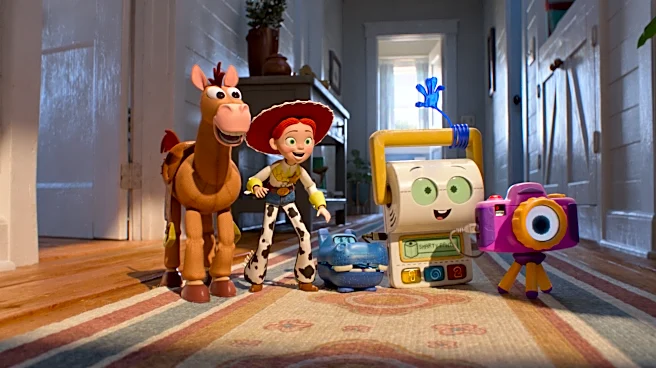



What's Happening?
In 'Toy Story 5,' the iconic characters Jessie, Woody, and Buzz Lightyear face a new challenge as their owner, Bonnie, becomes engrossed in a new tablet called Lilypad, neglecting her toys. The film explores the impact of screen time on traditional play,
with Jessie determined to win Bonnie back. The movie features the return of the original voice cast, including Tom Hanks, Tim Allen, and Joan Cusack, and continues the beloved franchise's tradition of addressing contemporary issues through the lens of animated storytelling.
Why It's Important?
'Toy Story 5' addresses the growing concern of screen time and its effects on children's play and imagination. By incorporating this modern issue into its narrative, the film resonates with both children and parents, highlighting the balance between technology and traditional play. The movie's release is significant for the entertainment industry, as it continues to leverage popular franchises to engage audiences with relevant social themes, potentially influencing family dynamics and discussions around technology use.
What's Next?
The film's reception could influence future storytelling in animated films, encouraging more narratives that tackle contemporary issues. It may also spark conversations among parents and educators about the role of technology in children's lives. As 'Toy Story 5' reaches audiences, it could lead to increased awareness and dialogue about screen time management and its impact on childhood development.
Beyond the Headlines
Beyond its entertainment value, 'Toy Story 5' serves as a cultural commentary on the evolving nature of play in the digital age. It raises questions about the future of traditional toys and the importance of fostering creativity and imagination in children. The film's exploration of these themes may contribute to broader discussions about the role of technology in society and its influence on future generations.