




What's Happening?
SambaNova, a privately held company headquartered in San Jose, California, is making strides in next-generation AI infrastructure. The company specializes in a full-stack inference platform, with its core technology centered around the Reconfigurable
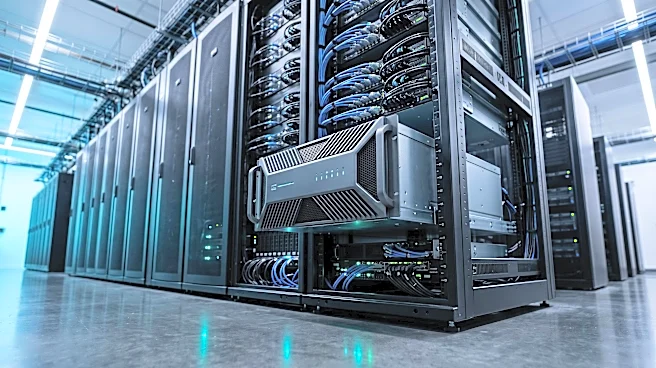
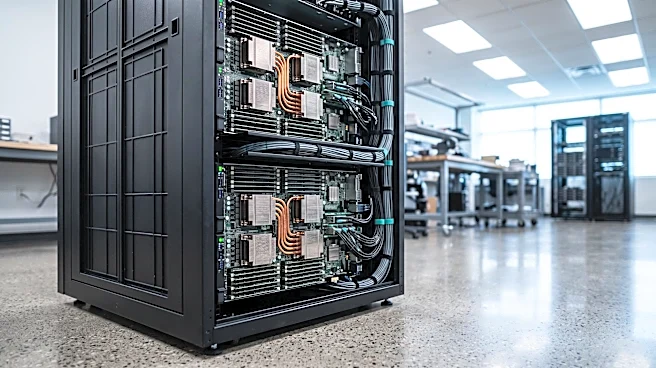
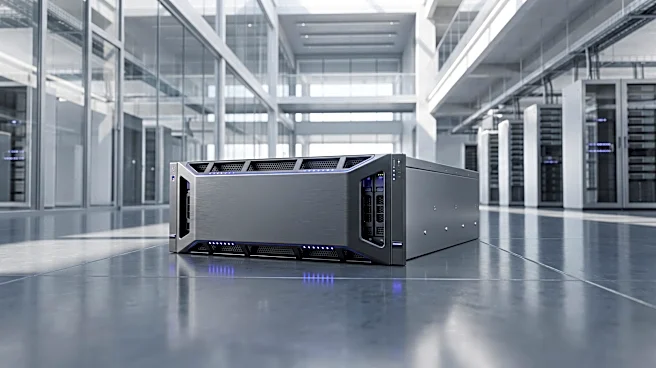
Dataflow Unit (RDU). Unlike traditional GPU models, the RDU is built on a dataflow architecture, which significantly enhances its performance for agentic workloads such as multi-turn agents, code generation, and long-running applications. These RDUs are integrated into SambaRack, a rack-scale hardware solution designed to improve performance, energy efficiency, and accelerate the deployment of advanced AI models. SambaNova also offers an internship program, providing hands-on experience in engineering challenges, with roles like RTL Design Engineer Intern focusing on building compute datapath, on-chip networks, and memory subsystems within the RDU.
Why It's Important?
SambaNova's development of the RDU and SambaRack technology is important for the U.S. technology sector as it offers an alternative to traditional GPU-based AI infrastructure. This innovation could lead to more efficient and powerful AI deployments, particularly for complex agentic workloads, which are becoming increasingly critical across various industries. Improved energy efficiency and faster time to value for deploying state-of-the-art models could reduce operational costs for businesses and accelerate AI adoption. The company's internship program is also significant, as it helps cultivate a skilled workforce in advanced AI hardware design, addressing the growing demand for specialized talent in this rapidly evolving field. This investment in human capital and cutting-edge technology positions the U.S. to maintain its leadership in AI innovation.
What's Next?
SambaNova is actively recruiting for various roles, including Machine Learning Engineer Intern, Physical Design Engineer Intern, RTL Design Engineer Intern, and Principal DevOps Engineer, indicating a continued focus on expanding its workforce and technological capabilities. The company's internship program is structured as a 12-week experience, offering mentorship and opportunities for high-performing interns to be considered for future employment. This suggests a pipeline for talent development and a commitment to ongoing innovation in AI infrastructure. As SambaNova continues to refine its RDU and SambaRack offerings, the market can expect further advancements in AI inference platforms, potentially leading to broader adoption of its dataflow architecture in enterprise and cloud environments.
Beyond the Headlines
The emergence of specialized AI hardware like SambaNova's RDU highlights a broader trend in the AI industry: the move beyond general-purpose GPUs towards more tailored architectures for specific AI workloads. This shift could lead to a more diverse and competitive landscape in AI hardware, fostering innovation and potentially reducing reliance on a few dominant players. The emphasis on dataflow architecture for agentic workloads suggests a future where AI systems are not just faster but also more adept at complex, multi-step reasoning and interaction. This could have profound implications for the development of more sophisticated AI assistants, autonomous systems, and advanced automation across various sectors, pushing the boundaries of what AI can achieve.