
What's Happening?
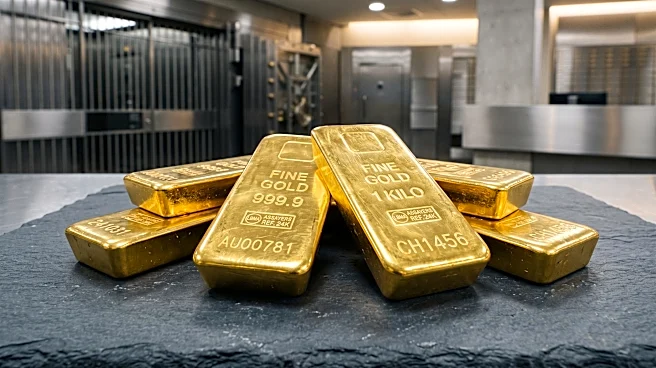
Gold is widely considered a safe-haven asset, meaning investors expect it to retain or increase in value during periods of market turmoil. This status is attributed to gold's lack of an issuer that can
default, its deep global liquidity, and its multi-millennia record as a store of value. However, gold's performance as a safe haven is not seamless. During acute liquidity crunches, such as the financial crisis in late 2008 and the pandemic shock in March 2020, gold experienced sharp, albeit short-lived, declines as investors sold liquid assets to raise cash. Despite these temporary dips, gold recovered quickly, finishing 2008 higher and setting a new record above $2,000 an ounce by August 2020. The asset's correlation with equities tends to turn lower, and sometimes negative, during significant stock market sell-offs, providing a cushion for diversified portfolios. Gold's value is also independent of any government or central bank, unlike other safe havens like U.S. Treasuries or the U.S. dollar.
Why It's Important?
The role of gold as a safe haven is crucial for U.S. investors and the broader financial system, offering a hedge against systemic risks and market instability. Its ability to act as an independent store of value, free from counterparty or default risk, makes it particularly appealing during times of financial stress. While gold may not always provide immediate protection during the most severe liquidity crunches, its historical tendency to recover and appreciate over the full arc of a crisis underscores its importance as an insurance asset. Understanding these dynamics helps investors make informed decisions about portfolio diversification, especially when anticipating or reacting to economic downturns, inflation, or currency weakness. The distinction between gold as a safe haven and an inflation hedge is also vital, as it clarifies the different timeframes and mechanisms through which gold provides protection, impacting investment strategies for both short-term shocks and long-term purchasing power preservation.
What's Next?
Investors will continue to monitor global economic indicators and geopolitical developments to assess the ongoing relevance and performance of gold as a safe haven. The asset's response to sustained stress, such as financial instability, falling real interest rates, or currency weakness, will be key. While gold can lag in calm, rising markets, its protective role during crises remains a primary driver for its demand. The method of holding gold also influences its safe-haven effectiveness; physical gold held outside the financial system is considered the purest form of protection, minimizing counterparty risk. Future market shocks or periods of high inflation could reinforce gold's appeal, prompting increased investment in physical gold and gold-backed assets as a defensive measure against broader market volatility.
Beyond the Headlines
The enduring appeal of gold as a safe haven reflects deeper psychological and historical factors in human finance. Its millennia-long history as money and a store of value has ingrained a collective confidence that transcends modern financial instruments. This cultural dimension contributes to its stability during crises, as a broad consensus of buyers maintains its liquidity even when other markets falter. The concept of gold as 'wealth insurance' rather than a 'wealth builder' highlights a fundamental aspect of risk management: paying for protection in times when it may not seem immediately necessary. This perspective encourages a long-term view of gold's role in a portfolio, acknowledging its potential for periods of underperformance in exchange for its critical function during systemic shocks. The debate between physical gold and paper gold products also touches upon the philosophical question of true asset ownership and independence from financial intermediaries.