


What's Happening?
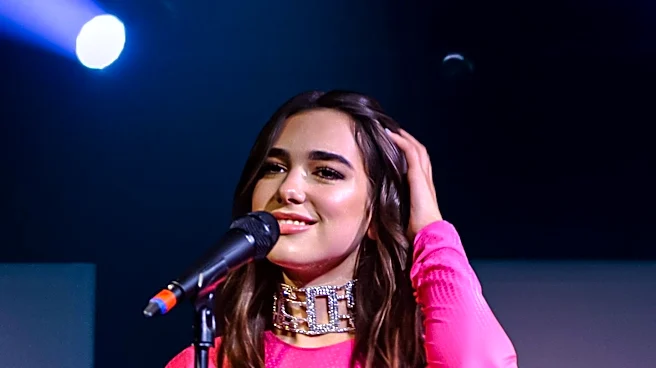
Dua Lipa, a Grammy-winning pop star, has become a prominent figure in the evolving landscape of celebrity influence, extending her reach beyond music to inspire trends in travel, reading, and dining. She actively engages with her audience through a book
club, interviews authors like Margaret Atwood, and shares cultural recommendations via her lifestyle platform, Service95. This multifaceted approach allows her to attract diverse audiences, from fashion enthusiasts drawn to her friendship with designer Simon Porte Jacquemus to readers engaging with her literary choices. This strategy represents a business model where celebrities monetize their personalities and interests, moving beyond traditional revenue streams like record sales and concert tickets. However, this model is facing scrutiny as younger consumers express fatigue with ubiquitous influencers and a preference for smaller, more authentic creators.
Why It's Important?
The shift in celebrity influence, exemplified by Dua Lipa, highlights a significant transformation in the creator economy. U.S. spending on creator advertising is projected to reach $44 billion, tripling from $13.9 billion in 2021. Despite this investment, a July survey of 13- to 39-year-olds by YPulse indicates that 62% are tired of seeing the same big names, and 73% trust smaller creators more. This suggests a growing skepticism towards overtly commercialized influence, where the line between genuine recommendation and paid endorsement blurs. For brands, this means that simply paying for attention may no longer translate to cultural credibility or perceived 'coolness.' The challenge lies in fostering authentic engagement and trust, as consumers seek more genuine connections and less curated content, impacting how businesses approach influencer marketing and brand partnerships.
What's Next?
The future of celebrity influence may see a shift away from the current model of ubiquitous presence and towards more specialized and authentic forms of engagement. Brand strategist Eugene Healey suggests potential successors to the 'Dua Lipa era' could be 'the obsessive,' 'the ghost,' or 'the host.' These archetypes emphasize deep expertise, subtle influence, or community building in real life, respectively. For brands, this implies a need to re-evaluate their strategies, moving beyond measuring influence solely by followers and likes. Instead, the focus may shift to creating meaningful experiences and fostering genuine connections, as suggested by Izzy Farmiloe of Dazed Studio. This could involve supporting community spaces or collaborating with individuals who offer unique value beyond product recommendations, such as librarians or local organizers, to build deeper brand loyalty.
Beyond the Headlines
The evolving economics of being 'cool' raise deeper questions about authenticity and consumer trust in the digital age. The increasing sophistication of content creation, including the use of artificial intelligence, makes it harder to distinguish between genuine and manufactured influence. This phenomenon challenges the traditional notion of celebrity, where mystique and aspirational lifestyles were key. Now, relatability and perceived authenticity are highly valued, yet even seemingly casual online content can be meticulously curated. The fatigue with 'trying too hard' suggests a cultural yearning for genuine human connection and expertise that cannot be easily replicated or summarized by AI. This could lead to a re-emphasis on niche communities, specialized knowledge, and real-world interactions as the new markers of cultural relevance and influence.