




What's Happening?
A Sydney woman has become the first person in Australia to be buried in a coffin grown from mushrooms, marking a significant step in the country's shift towards environmentally friendly burial practices. The woman, identified as Carolyn, received a funeral
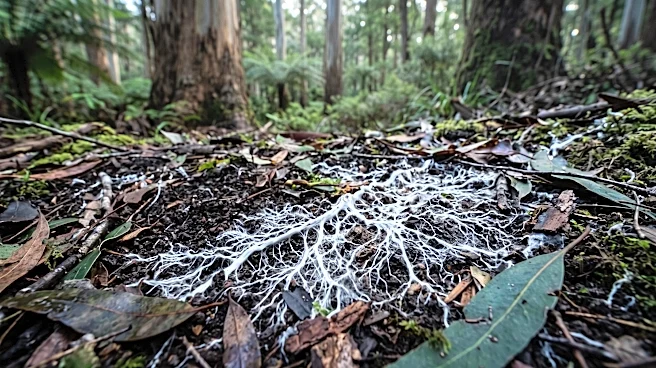
service in Faulconbridge before being interred at Springwood Cemetery in the Blue Mountains, New South Wales. The coffin, developed by the Dutch company Loop Biotech, is made from mycelium, the root-like network of a mushroom colony, mixed with hemp fibers from agricultural waste. This material is molded and grown in a climate-controlled room over about a week. Once buried, the mushroom coffin is designed to be absorbed into the soil in approximately 45 days, a stark contrast to the up to 50 years it can take for a traditional wooden casket to decompose. Carolyn's husband, Donald, noted that this choice reflected her values, allowing her to contribute to nature even after death.
Why It's Important?
This development in Australia reflects a growing global trend towards sustainable end-of-life options, which has implications for the U.S. funeral industry and environmental policy. With approximately 200,000 funerals annually in Australia, and cremations outnumbering burials, the environmental impact of traditional practices is a significant concern. A typical cremation produces over 100kg of carbon dioxide, while conventional burials can involve embalming chemicals and slow-decomposing materials. The introduction of mushroom coffins, alongside other alternatives like alkaline hydrolysis and human composting, offers a biodegradable solution that enriches the soil rather than polluting it. For the U.S., where similar environmental concerns exist, the success and acceptance of such innovative burial methods in Australia could pave the way for increased adoption and regulatory changes. It highlights a potential shift in consumer demand towards eco-conscious choices, influencing funeral service providers and potentially leading to new industry standards and legislative efforts to legalize and promote sustainable burial practices across various states.
What's Next?
The adoption of mushroom coffins and other eco-friendly burial methods is expected to continue growing in Australia, with potential ripple effects globally. Asha Dooley, managing director of Grace Funerals and national president of Funerals Australia, noted a significant increase in client interest in environmental sustainability over the past five years, indicating a broader shift in consumer preferences. The independent Sydney MP Alex Greenwich has already introduced a bill to legalize human composting in New South Wales, which would make it the first Australian state to permit this method. This legislative movement suggests that regulatory frameworks are beginning to adapt to these new practices. For the U.S., this could mean increased pressure on state legislatures to consider similar bills, and a rise in demand for funeral homes offering these alternatives. Companies like Loop Biotech may also expand their operations to meet this growing international demand, further integrating sustainable options into the mainstream funeral industry.
Beyond the Headlines
The emergence of mushroom coffins and other 'eco-death' practices signifies a deeper cultural shift, particularly as fewer individuals identify with organized religion. Dr. Hannah Gould, a cultural anthropologist at the University of Melbourne, suggests that as religious affiliations decline, other values, such as environmentalism, become more central to end-of-life decisions. The idea of 'returning to the earth' rather than ascending to heaven resonates with a growing segment of the population. This trend challenges traditional notions of death and remembrance, moving towards a more ecological and interconnected understanding of life's cycle. It also raises ethical questions about the commercialization of sustainability in death care and the accessibility of these options across different socioeconomic groups. The long-term implications could include a redefinition of memorialization, with a greater emphasis on ecological legacy and a more integrated approach to human life within natural ecosystems, potentially influencing land use for cemeteries and the design of memorial spaces.