







What's Happening?
The African Export-Import Bank (Afreximbank) and the African Petroleum Producers’ Organization (APPO) have officially established the Africa Energy Bank (AEB) in Abuja, Nigeria. This new institution has been launched with an authorized capital of $5 billion,
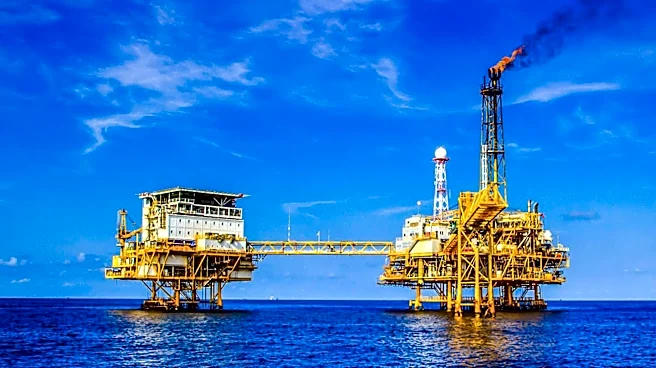
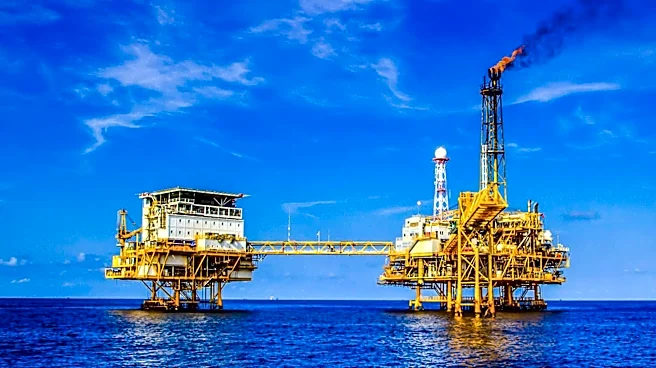
specifically earmarked to finance oil and gas projects across the African continent. The inaugural general meeting of the bank took place on October 31, where the establishment was announced. The AEB aims to address a significant financing gap in Africa's energy sector, as traditional lenders increasingly withdraw from fossil fuel investments. The bank's mandate includes funding projects throughout the entire value chain, from exploration and production to transportation, processing, refining, and distribution. This initiative is designed to boost Africa's productive capacity, reduce its reliance on imported petroleum products, and foster intra-African energy trade. Helmy Ghazi has been appointed as the AEB's first president, and a board of directors comprising members from public and private sectors, as well as leading policy institutions, has been formed.
Why It's Important?
The launch of the Africa Energy Bank is a critical development for Africa's energy independence and economic stability. With an estimated energy investment need of $200 billion, the AEB's $5 billion capital aims to fill a crucial void left by the global shift away from fossil fuel financing. This move signifies African governments' determination to control their energy future and ensure that the continent's energy sector development is driven by African interests. By funding upstream oil and gas projects, the bank seeks to enhance energy security, reduce import costs, and stimulate industrial growth across the continent. The initiative also emphasizes promoting African participation in the sector, which could lead to job creation, technology transfer, and increased local content development. The AEB's approach, which includes supporting a 'just energy transition,' acknowledges the continent's continued reliance on oil and gas while also considering future energy needs and emerging technologies like artificial intelligence.
What's Next?
The Africa Energy Bank will now focus on attracting further investment from various stakeholders, including governments, national oil companies, financial institutions, and private investors, to expand its capital base beyond the initial $5 billion. The newly appointed president, Helmy Ghazi, and the board of directors will be instrumental in shaping the bank's operational strategies and identifying priority projects for financing. The bank is expected to begin evaluating and funding projects across the oil and gas value chain, with an emphasis on those that contribute to boosting productive capacity and promoting intra-African energy trade. Its commitment to a 'just energy transition' suggests that future initiatives may also explore how oil and gas revenues can support the development of renewable energy sources and other sustainable practices in the long term. The success of the AEB will likely be measured by its ability to effectively bridge the financing gap and contribute to Africa's energy self-sufficiency and economic development.
Beyond the Headlines
The establishment of the Africa Energy Bank highlights a growing divergence in global energy policy, particularly concerning fossil fuels. While many developed nations are accelerating their transition away from oil and gas, African nations are asserting their right to utilize their natural resources for economic development and energy security. This initiative could set a precedent for other resource-rich regions facing similar financing challenges due to global climate policies. It also raises questions about the definition and implementation of a 'just energy transition,' suggesting that for many developing economies, this transition must include the continued, strategic use of fossil fuels to support industrialization and poverty alleviation. The AEB's focus on promoting African participation in the sector could also foster greater regional cooperation and integration, potentially leading to a more robust and self-reliant African energy market. This move underscores the complex interplay between climate goals, economic development, and national sovereignty in the global energy landscape.