
What's Happening?
The North America foam food container market is forecast to grow from USD 1.05 billion in 2025 to USD 1.43 billion by 2035, exhibiting a compound annual growth rate (CAGR) of 3.1% from 2026 to 2035. This
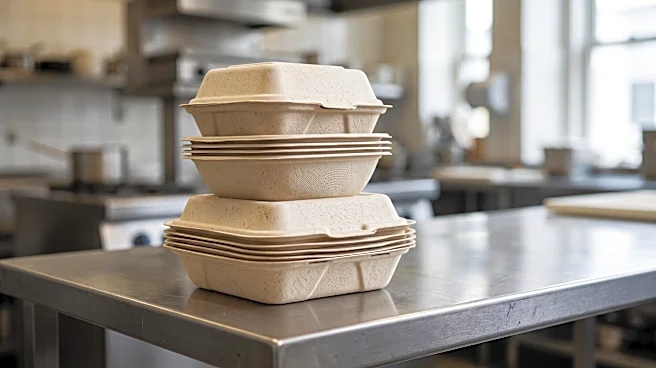
growth rate is the slowest among global regions, trailing Asia Pacific (5.5%) and the global market (4.2%), primarily due to increasing bans on polystyrene foam. Expanded Polystyrene (EPS) currently accounts for 64% of 2025 sales but is projected to grow at a mere 1.6% due to these bans. In contrast, Bio-based Foam is the fastest-growing segment at 8.7% CAGR, followed by Polypropylene Foam at 5.0% CAGR, as suppliers adapt to regulatory changes. The market encompasses foam clamshells, trays, bowls, cups, and boxes used in various food service applications, with quick-service restaurants, takeaway, and delivery services being key end-users. The United States dominates the market, holding 78.22% of 2025 sales, while Canada's market is constrained by federal bans on foam takeout containers.
Why It's Important?
The evolving landscape of the North American foam food container market signifies a critical shift for manufacturers, distributors, and food service providers across the U.S. The widespread implementation of state and city-level bans on polystyrene foam is directly impacting market dynamics, forcing a transition towards alternative materials like polypropylene and bio-based foams. This regulatory pressure creates both challenges and opportunities; companies heavily invested in EPS production face declining demand, while those innovating in sustainable alternatives stand to gain market share. The continued growth of takeaway and delivery services, which rely on insulated containers, provides a persistent demand for foam products, albeit with a preference for compliant materials. This trend underscores the importance of adaptability and investment in new material technologies for businesses operating within the food packaging sector to remain competitive and meet evolving consumer and regulatory expectations.
What's Next?
The market is expected to continue its slow growth trajectory, with the pace largely determined by the spread of foam bans and the adoption of alternative materials. Manufacturers are likely to further invest in polypropylene and bio-based foam solutions to cater to states with restrictions and to meet the demands of environmentally conscious consumers and businesses. Recycling programs for clean foam foodservice waste could emerge as a significant opportunity, potentially mitigating some of the negative impacts of bans by offering a sustainable end-of-life solution. The competition among suppliers will intensify, focusing on technical qualifications, local content capabilities, and the ability to manage risk across complex, long-duration projects. The market's future will also be shaped by the ability of alternative materials to close the cost gap with traditional polystyrene, influencing the speed and extent of the transition.
Beyond the Headlines
Beyond the immediate economic implications, the shift in the foam food container market reflects broader societal and environmental concerns regarding single-use plastics. The increasing regulatory actions against polystyrene highlight a growing public and governmental commitment to reducing plastic waste and promoting more sustainable packaging solutions. This trend could accelerate research and development into novel biodegradable and compostable materials, potentially revolutionizing the entire food packaging industry. Furthermore, the emphasis on extended producer responsibility fees suggests a move towards holding manufacturers accountable for the entire lifecycle of their products, which could lead to more circular economy models within the packaging sector. The market's trajectory serves as a microcosm of the larger global effort to balance convenience with environmental stewardship, influencing consumer choices and corporate strategies for years to come.