







What's Happening?
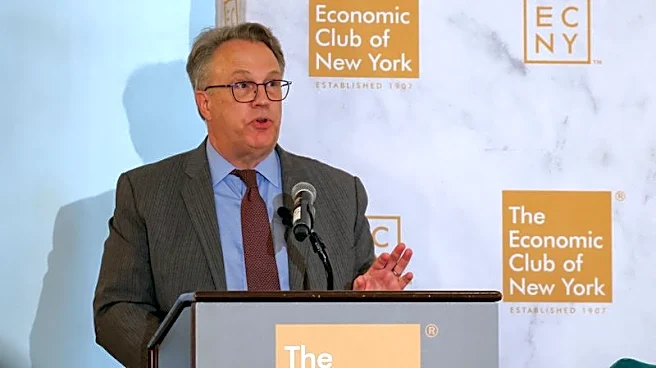
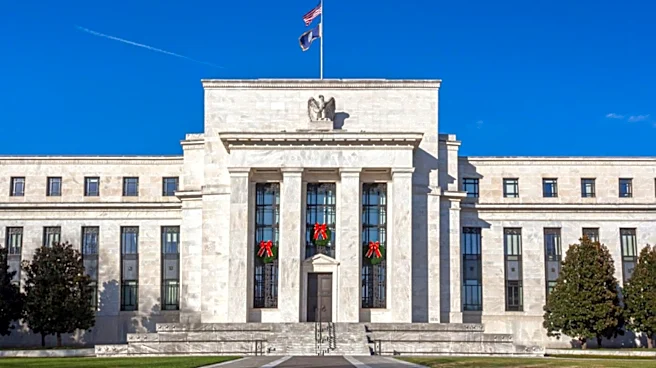
John Williams, President of the Federal Reserve Bank of New York, expressed optimism that energy prices will not see a sustained increase despite ongoing conflicts in the Middle East. Speaking at a conference, Williams noted that market expectations suggest
oil prices will decline over the next six to twelve months. This outlook comes after the Fed's mid-June meeting, where interest rates were held steady at 3.5% to 3.75%. Williams highlighted that the Fed's monetary policy is well-positioned to address current economic risks, although the recent escalation in Middle East tensions could impact energy prices and inflation.
Why It's Important?
Williams' comments are crucial as they provide insight into the Fed's perspective on energy prices and inflation, key factors influencing monetary policy. A stable or declining energy price environment could ease inflationary pressures, reducing the need for aggressive interest rate hikes. This would benefit consumers and businesses by keeping borrowing costs lower. However, the geopolitical situation remains volatile, and any significant disruption in energy supply could alter this outlook, affecting economic stability and policy decisions.
What's Next?
The Federal Reserve will continue to assess the impact of geopolitical developments on energy prices and inflation. The upcoming Federal Open Market Committee meeting will be critical in determining any adjustments to interest rate policies. Stakeholders, including financial markets and policymakers, will be closely monitoring these developments for potential shifts in economic strategy.