





What's Happening?
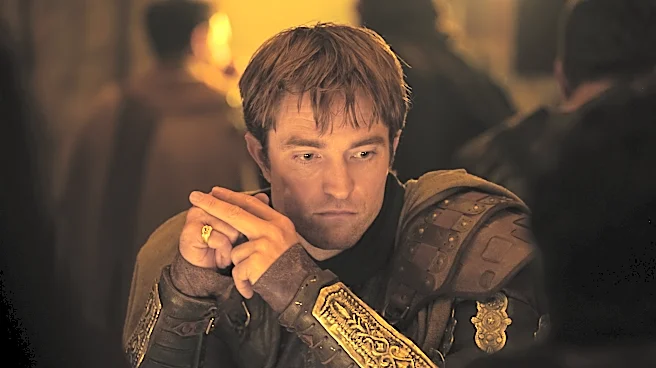
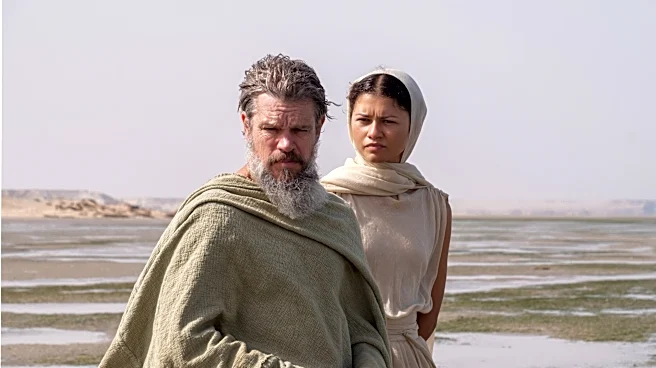
Christopher Nolan's 2026 film, 'The Odyssey,' reinterprets Homer's classic epic, transforming it into a modern psychological drama. The movie focuses on themes of war, guilt, and moral vulnerability, departing from traditional heroic narratives. Nolan's adaptation
emphasizes a human-centered approach, filtering extraordinary events through trauma, memory, and political reaction. Odysseus is portrayed as a morally damaged survivor burdened by the destruction of Troy, with his journey home becoming an ordeal of his moral fiber. The film also gives significant attention to Penelope and Telemachus, highlighting how Odysseus's return impacts his family and kingdom. Notably, the ending deviates from Homer's original vision, with Odysseus abdicating and going into exile with Penelope, allowing Telemachus to become king. This reinterpretation shifts the moral gravitas towards the consequences of violence and the abuse of power.
Why It's Important?
This cinematic reinterpretation by a prominent director like Christopher Nolan holds significance for several reasons. It demonstrates a contemporary approach to classical literature, making ancient narratives relevant to modern audiences by exploring universal themes of trauma, morality, and the human cost of conflict. The film's commercial success and critical acclaim suggest a strong public appetite for intellectually stimulating and emotionally grounded adaptations. By challenging traditional hero worship and focusing on ethical consequences, 'The Odyssey' prompts viewers to reconsider historical narratives and the nature of power. The casting of a Black Helen also sparks discussions about the reinterpretation of myths across cultures and challenges conventional representations, contributing to broader conversations about diversity and representation in media. This adaptation could influence future cinematic approaches to classical texts, encouraging more nuanced and psychologically complex portrayals.
What's Next?
The critical and commercial success of Nolan's 'The Odyssey' is likely to inspire further adaptations of classical literature that prioritize psychological depth and contemporary relevance over strict adherence to traditional heroic narratives. This could lead to a trend of filmmakers exploring the 'unheroic' aspects of iconic figures and stories. The film's innovative technical achievements, particularly its use of IMAX 70mm cameras and practical effects, may also set new benchmarks for cinematic production, pushing other directors to explore similar immersive and realistic filmmaking techniques. Discussions surrounding the film's thematic departures and casting choices are expected to continue, potentially influencing academic discourse on classical reception and cultural studies. The film's impact could extend to how audiences perceive and engage with ancient epics, fostering a deeper appreciation for their enduring relevance.
Beyond the Headlines
Nolan's 'The Odyssey' delves into profound ethical and cultural dimensions. By recasting conquest as a 'civilizational failure' rather than a triumph, the film challenges the glorification of war and violence, prompting a re-evaluation of historical narratives. The dialogue, which repeatedly questions heroic illusions, encourages a more critical perspective on leadership and power. The altered ending, where Odysseus abdicates and goes into exile, raises fundamental questions about the right to power after survival and the moral responsibilities of those who have wielded it. Furthermore, the portrayal of Helen as a Black woman, while sparking debate, highlights the fluidity of myths and their continuous reinterpretation by different cultures. This challenges the notion of fixed cultural ownership over classical narratives and underscores the importance of diverse perspectives in storytelling, even as it opens up discussions about character development and representation.