





What's Happening?
NXP Semiconductors N.V. has broken ground on a new assembly and test (A&T) factory in Petaling Jaya, Malaysia, expanding its existing operations in the region. This new facility will add approximately 500,000 square feet of production space, bringing
the total site to around 900,000 square feet upon completion. The expansion is a strategic move to strengthen NXP's global manufacturing capabilities, increase internal capacity, and enhance supply chain resilience and flexibility for its worldwide customer base. The factory is projected to commence production ramp-up in the first quarter of 2028, with expectations to more than double the site's overall output once fully operational. This development is part of NXP's hybrid manufacturing strategy, aiming for greater flexibility, supply control, and geographic diversification, complementing its existing A&T operations in other regions like Greater China and Thailand. The groundbreaking ceremony was attended by government officials, partners, and NXP executives, including the Honorable Gobind Singh Deo, Minister of Digital, Malaysia, and His Excellency Jacques Werner, Ambassador of the Kingdom of the Netherlands to Malaysia.
Why It's Important?
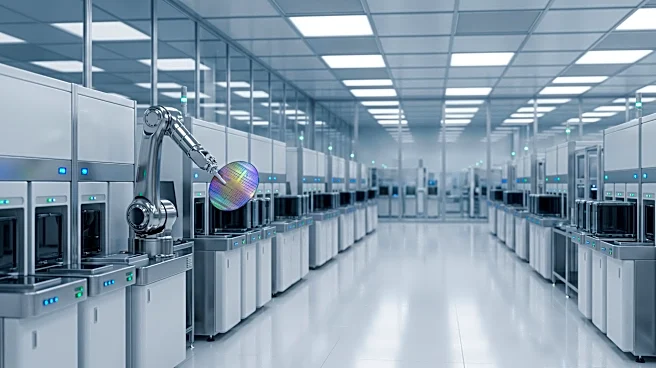
This expansion is crucial for NXP Semiconductors, a leading supplier of automotive semiconductors, as it directly addresses the growing global demand for secure and high-performance semiconductor components across various sectors, including automotive, industrial, and IoT. By significantly increasing its assembly and test capacity, NXP aims to bolster its ability to meet future growth, particularly in the automotive segment, which has seen faster revenue growth compared to its overall top line. The investment in a highly automated smart factory, featuring advanced technologies like Automated Material Handling Systems, underscores a commitment to optimizing manufacturing operations, improving efficiency, and ensuring high-quality production. This strategic move enhances NXP's supply chain resilience, a critical factor in the semiconductor industry, which has faced significant disruptions in recent years. For the U.S. market, a more robust and diversified supply chain from a major semiconductor provider like NXP can contribute to greater stability and availability of essential components for industries reliant on these technologies, potentially mitigating future supply shortages and supporting innovation in connected devices and systems.
What's Next?
The new Malaysian factory is slated to begin ramping up production in the first quarter of 2028, with the goal of more than doubling the site's output once fully operational. This increased capacity will support NXP's future growth across its manufacturing ecosystem, including anticipated output from joint ventures like VSMC in Singapore and ESMC in Dresden, Germany. The company's guidance points to continued growth in its automotive and industrial segments throughout the current fiscal year, with management expecting demand from carmakers and industrial customers to drive modestly higher revenue compared to the preceding quarter. Investors will be closely monitoring the integration of this new facility into NXP's global operations and its impact on the company's financial performance, particularly its ability to convert increased capacity into earnings per share. The expansion also positions NXP to potentially pursue further strategic acquisitions, especially in areas like autonomous driving, to strengthen its technology portfolio and offer more integrated solutions to carmakers.
Beyond the Headlines
The expansion of NXP Semiconductors' manufacturing capabilities in Malaysia highlights a broader trend in the semiconductor industry towards diversifying production geographically to enhance resilience against geopolitical risks and supply chain vulnerabilities. This move is not just about increasing output but also about strategically positioning NXP to capitalize on the evolving demands of the automotive sector, particularly the shift towards software-defined vehicles and advanced driver-assistance systems. The emphasis on a 'smart factory' with high automation reflects the industry's push for efficiency and quality through technological innovation. Furthermore, NXP's continuous investment in its automotive segment, which includes microcontrollers, radar chips, and connectivity solutions, underscores the critical role semiconductors play in the future of transportation. This strategic focus could lead to significant advancements in vehicle safety, autonomy, and connectivity, impacting the entire automotive ecosystem and consumer experience globally.