





What's Happening?
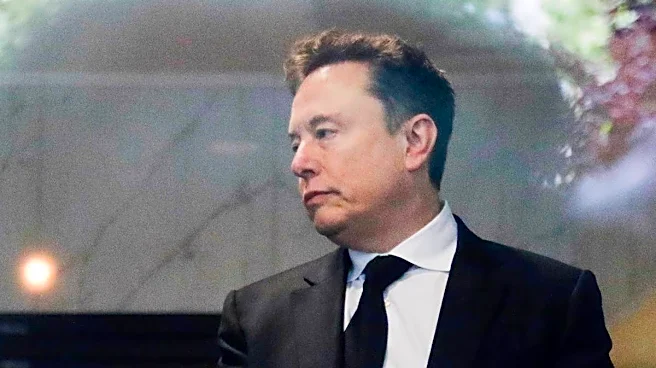
Elon Musk, CEO of Tesla Inc. and Space Exploration Technologies Corp., has publicly addressed claims from an upcoming documentary that labels him as 'the most miserable man.' In a post on X, Musk stated that he is 'happy about half the time, somewhere
in the middle about 40% and sad about 10% of the time.' This statement came after his mother, Maye Musk, shared a Hollywood Reporter preview of director Alex Gibney's documentary, which quoted an unnamed source close to Musk making the 'miserable man' assertion. Maye Musk dismissed the claim as 'weird,' noting she has not seen her son miserable. The nearly four-hour documentary, which does not include an interview with Musk, focuses on his aggregation of power, particularly through his control of vast amounts of data, and suggests he is 'no longer interested in checking his worst impulses.'
Why It's Important?
This public exchange highlights the intense scrutiny and public perception surrounding prominent U.S. business leaders and innovators like Elon Musk. As the world's richest person, his personal well-being and public image can influence investor confidence in his companies, Tesla and SpaceX, which are significant players in the U.S. and global technology and automotive sectors. The documentary's focus on his 'aggregation of power' and control over data touches upon broader societal concerns regarding the influence of tech billionaires and the ethical implications of their ventures. For U.S. society, this narrative contributes to ongoing discussions about wealth, power, and accountability in the digital age, potentially shaping public opinion and regulatory debates concerning technology companies and their leadership.
What's Next?
The documentary is scheduled to premiere at the Venice Film Festival on September 8, with a theatrical release in October and an HBO debut in the first half of 2027. Its release will likely reignite public discussion about Elon Musk's personality, leadership style, and the impact of his companies. Reactions from the public, media, and potentially investors could follow, influencing the narrative around Musk and his ventures. Given Gibney's history of tackling powerful institutions, the film is expected to provoke strong opinions. Musk's continued engagement on social media platforms like X may also serve as a platform for further responses or clarifications regarding the documentary's portrayal.
Beyond the Headlines
Beyond the immediate controversy, this event underscores the evolving relationship between public figures, media, and the digital sphere. Elon Musk's direct response on X exemplifies how modern public figures can bypass traditional media gatekeepers to address narratives directly. The documentary's premise, focusing on the 'aggregation of power' through data, taps into a growing societal anxiety about the concentration of influence in the hands of a few tech giants and their leaders. This raises ethical questions about data privacy, algorithmic control, and the potential for unchecked power in the digital economy. The public's reception of the documentary and Musk's counter-narrative will offer insights into how these complex issues are perceived and debated within the U.S. and globally.