





What's Happening?
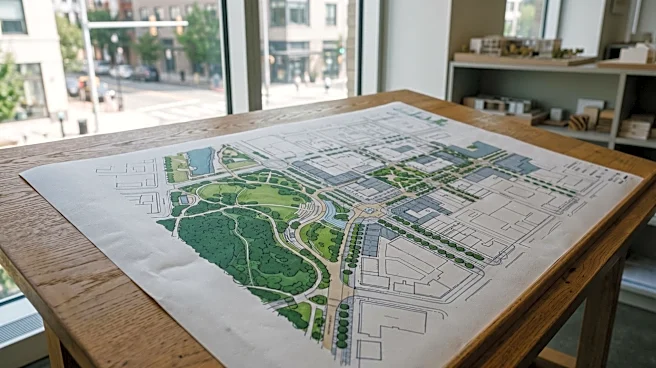
The Utah City development in Vineyard, Utah, a 700-acre project envisioned as the city's new downtown, is facing increased scrutiny from newly elected City Council members and Mayor Zack Stratton. While previous Vineyard officials strongly supported the project,
granting significant development rights and tax incentives, current leaders are questioning the high-density, transit-oriented community model and the substantial public funds allocated to the developer, Flagborough LLC. Concerns include the project's focus on rental properties over homes for sale, its affordability, and the transparency of payments made by the city's Redevelopment Agency (RDA). The City Council has hired a panel of residents to investigate past RDA contracts and payments, including those related to Utah City.
Why It's Important?
This situation highlights a growing tension in rapidly developing U.S. suburban areas between ambitious urban planning initiatives and local community concerns. The debate in Vineyard reflects broader national discussions about urban sprawl, housing density, and the role of public funding in private development. The outcome of this scrutiny could influence future urban planning strategies in Utah and other states facing similar growth challenges. If the new council successfully rolls back some of the developer incentives, it could signal a shift towards more community-driven development policies. Conversely, if the project continues as planned, it could serve as a model for creating walkable, high-density communities in traditionally car-centric regions, despite local resistance. The financial implications for taxpayers and the developer are significant, with millions of dollars already invested and potentially more at stake.
What's Next?
The newly formed panel of residents will continue to probe the Vineyard RDA's past contracts and payments, which could uncover further details about the financial arrangements with Utah City developers. The City Council's ongoing review of the project's policies and incentives may lead to changes in zoning, funding, or development agreements. While developers remain committed to the project, emphasizing its long-term benefits like a strong sales tax base and future employment opportunities from a Huntsman Cancer Institute hospital and Utah Valley University campus, the political climate in Vineyard has clearly shifted. The debate over density and affordability will likely continue, with potential impacts on the project's timeline and scope. The developers plan to complete Utah City in 15 to 20 years, but the current scrutiny could introduce unforeseen delays or modifications.
Beyond the Headlines
The Utah City project embodies a national urban planning experiment: can a walkable, dense downtown thrive within a suburban sprawl? This case study will offer insights into the challenges and successes of such initiatives, particularly in regions where car dependency is deeply ingrained. It also touches upon the ethical considerations of public-private partnerships, especially when significant taxpayer money is involved and local sentiment shifts. The concept of 'affordable luxury' in housing, as described by developers, raises questions about who truly benefits from these high-density developments and whether they genuinely address the housing needs of diverse income groups. The project's long-term success or failure could provide valuable lessons for urban planners, policymakers, and communities across the U.S. grappling with similar development pressures.