




What's Happening?
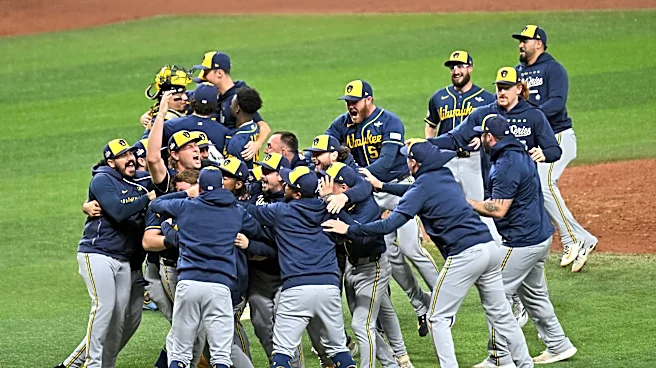
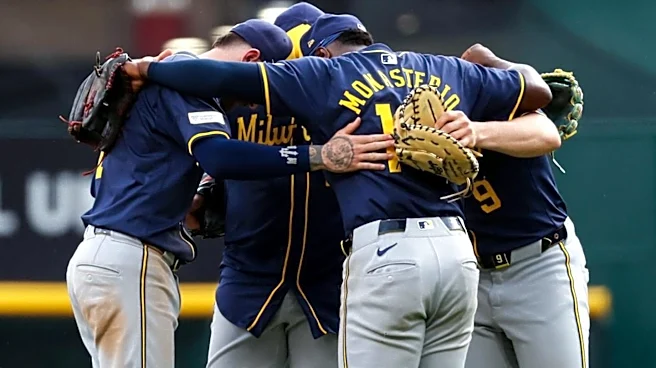
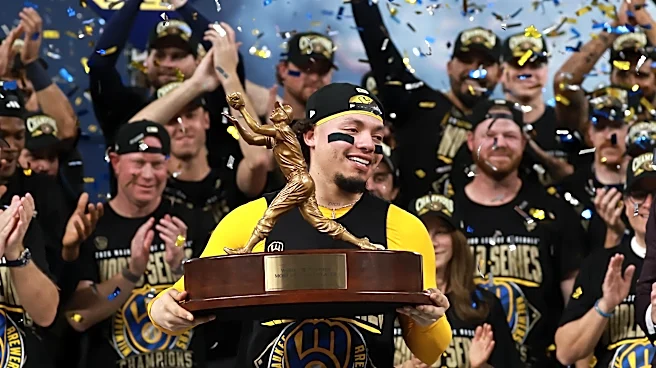
The Milwaukee Brewers secured the 2026 World Series championship with an offensive strategy that emphasized 'small ball,' a departure from the power-hitting trends prevalent in Major League Baseball. This approach, which prioritizes speed, precision,
and athleticism over home runs, saw the Brewers swing at the lowest percentage of pitches in MLB (44.1%) and pull only 33.5% of their hits, the third-lowest rate in the pitch tracking era since 2008. Despite ranking fifth in average bat speed, they were last in the percentage of batted balls in the air. Their success, alongside the AL pennant-winning Rays and the LCS-reaching Guardians, suggests a potential shift in offensive philosophy, particularly for small-market teams that may not be able to build rosters deep with power hitters.
Why It's Important?
The Brewers' championship victory with a 'small ball' approach holds significant implications for MLB. It challenges the prevailing analytics-driven focus on maximizing launch angle and exit velocity for home runs, demonstrating that alternative offensive strategies can lead to success. This could encourage other teams, especially those in smaller markets with limited budgets, to invest in athleticism, contact hitting, and strategic base running. The success of the Brewers, Rays, and Guardians suggests that a balanced approach, combining strong pitching and defense with an opportunistic offense, can be a viable path to contention. This shift could lead to more diverse playing styles across the league, potentially making games more dynamic and less reliant on the long ball, which could impact fan engagement and the overall viewing experience.
What's Next?
Following the Brewers' success, other MLB teams are likely to re-evaluate their offensive strategies and potentially explore incorporating more 'small ball' elements. General Managers and coaching staffs will analyze the Brewers' data, particularly their plate discipline, opposite-field hitting, and ability to generate runs without relying heavily on home runs. This could lead to changes in player development, scouting priorities, and in-game tactics. While power will always be a factor, the 2026 season might mark a turning point where athleticism and strategic hitting gain renewed importance, especially with the ongoing impact of the pitch timer incentivizing stolen bases and faster play. The long-term trend will depend on whether this success is an anomaly or the beginning of a broader strategic shift in baseball.
Beyond the Headlines
The Brewers' championship highlights a deeper narrative about innovation and adaptation within established systems. In a sport often characterized by adherence to dominant trends, their success with a counter-cultural approach demonstrates the value of strategic differentiation. This extends beyond baseball, suggesting that challenging conventional wisdom and leveraging unique strengths can lead to unexpected victories in various competitive fields. It also underscores the cyclical nature of sports strategies, where what was once considered 'old school' can be re-imagined and become effective again. The emphasis on athleticism and fundamental skills over pure power also speaks to the enduring appeal of well-rounded performance, offering a refreshing perspective on what constitutes a winning formula.