





What's Happening?
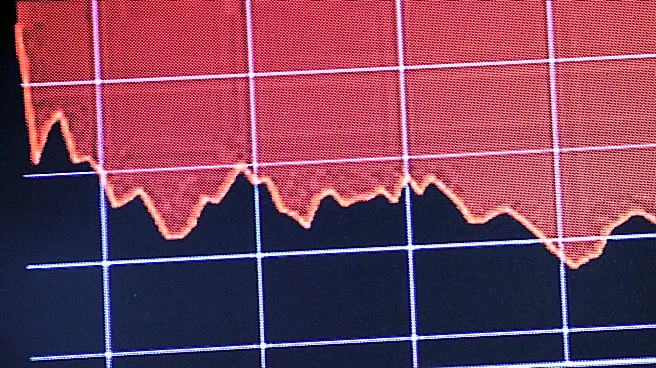
Applied Materials (AMAT), the largest U.S. supplier of semiconductor manufacturing equipment, experienced a significant stock decline of 19.7% in the month leading up to November 25, 2026, closing at $311.18. This drop was steeper than the broader market's
performance during the same period. The company's stock fell from $387.59 on October 26, 2026. Despite reporting record fiscal fourth-quarter results on November 12, 2026, with revenue rising 53% year over year to $10.41 billion and adjusted EPS reaching $4.16, the shares faded. The decline was largely attributed to sector-driven pressures, including broad AI-infrastructure selloffs on November 5 and November 20, and post-election fears of tighter chip export rules. Applied Materials' competitive edge lies in its broad portfolio of process steps for turning silicon wafers into finished chips and its co-development partnerships, including 15 EPIC partnerships with entities like Intel and UCLA. The company's Semiconductor Systems segment reported a record $8.0 billion in revenue in fiscal Q4 2026.
Why It's Important?
The decline in Applied Materials' stock is important as it reflects broader market sentiment and potential shifts within the U.S. semiconductor industry, a critical sector for national technology and economic growth. As the largest U.S. supplier of semiconductor manufacturing equipment, AMAT's performance is a key indicator for the health of the entire semiconductor supply chain. The 'AI capex skepticism' and 'post-election fears of tighter chip export rules' highlight significant concerns for U.S. technology companies. Tighter export rules, particularly concerning China, could directly impact AMAT's revenue, as China has historically been its largest single market. This situation could lead to reduced investment in semiconductor manufacturing within the U.S. or a re-evaluation of global supply chain strategies. The valuation unwind from an 'extraordinary run' suggests that investors are reassessing the sustainability of high growth rates in the AI sector, potentially affecting other technology companies reliant on AI buildouts. This could lead to a more cautious investment environment for U.S. tech firms and impact job creation and innovation in the sector.
What's Next?
Investors will closely monitor Applied Materials' fiscal Q1 2027 results, expected in February 2027, with management guiding for approximately $11.1 billion in revenue and $4.35 in non-GAAP EPS. Peer commentary from other wafer fab equipment (WFE) suppliers like LRCX, KLAC, and ASML will be crucial in validating Applied Materials' forecast of over 30% WFE market growth in calendar year 2027. Any further tightening of U.S. export control policies towards China could directly impact AMAT's shipment mix, as Beijing has already expressed public opposition. Supply chain constraints, particularly in parts availability and clean-room capacity, along with ramp costs associated with hiring and training, are also factors that could influence future performance. The durability of the company's gross margin expansion, which has occurred for 14 consecutive quarters, will be central to its valuation debate. Additionally, movements in interest rates and signals regarding cloud capital spending are expected to continue driving the stock's relative performance against the broader market.
Beyond the Headlines
The volatility experienced by Applied Materials extends beyond immediate financial metrics, touching upon critical geopolitical and technological shifts. The 'post-election fears of tighter chip export rules' underscore the increasing politicization of global technology supply chains. This trend could lead to a more fragmented global semiconductor market, potentially forcing U.S. companies to re-evaluate their manufacturing and sales strategies, especially concerning major markets like China. The 'AI capex skepticism' suggests a maturing or recalibration of expectations around artificial intelligence investments. While AI demand remains strong, the market is scrutinizing the pace and scale of capital expenditure, which could influence long-term innovation cycles and the competitive landscape. The emphasis on co-development partnerships, such as the 15 EPIC collaborations, highlights a strategic move towards deeper integration with customers, potentially creating more resilient and collaborative ecosystems in the face of external pressures. This collaborative approach could become a model for other U.S. industries navigating complex global dynamics and rapid technological advancements.