




What's Happening?
Gallery walls, which are curated collections of multiple framed pieces, provide a versatile approach to home decoration. These displays can incorporate various art forms, including photography, illustrations, and movie posters, allowing for personalized
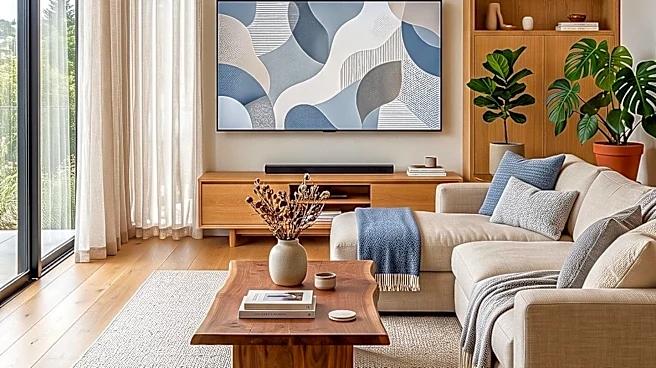
aesthetic expressions. The arrangement of these pieces can range from highly structured, symmetrical grids to more relaxed, organic layouts. A key principle for hanging a gallery wall is to treat the entire collection as a single artwork, centering its visual midpoint at an eye-level height of 57 to 60 inches from the floor, a standard adopted by museums and galleries. The spacing between individual frames is also crucial, with recommendations ranging from two to three inches for a tight, curated feel, up to six inches for a more relaxed arrangement. For horizontal triptychs placed above furniture, a gap of 5 to 7 centimeters between pieces is suggested to maintain rhythm. These guidelines aim to ensure the display appears cohesive and intentional rather than a random assortment of items.
Why It's Important?
The growing popularity of gallery walls reflects a broader trend in interior design towards personalized and flexible home aesthetics. This approach empowers individuals to curate their living spaces with meaningful art and memories, moving beyond single statement pieces to create dynamic visual narratives. The emphasis on specific hanging guidelines, such as centering the entire arrangement at eye level and maintaining consistent spacing, underscores the importance of thoughtful design in achieving a professional and aesthetically pleasing outcome. For consumers, understanding these principles can prevent common decorating mistakes, ensuring their investment in art and frames is displayed effectively. For businesses in the home decor and framing industries, these trends highlight a demand for customizable solutions, diverse framing options, and potentially, services that assist with gallery wall planning and installation. The ability to create gallery walls without drilling, using lightweight frames and removable hanging products, also broadens accessibility for renters and those hesitant to make permanent alterations to their walls, expanding the market for such products.
What's Next?
As gallery walls continue to be a prominent interior design trend, further innovations in hanging solutions and customizable framing options are anticipated. Manufacturers may focus on developing more user-friendly tools and templates to simplify the installation process, particularly for complex, multi-frame arrangements. The market could also see an increase in curated gallery wall sets that include pre-selected frames and art, designed to fit specific aesthetic themes or room dimensions. Additionally, with the emphasis on personalized displays, there may be a rise in services offering professional consultation and installation for gallery walls, catering to consumers seeking expert guidance. Educational content, such as online tutorials and design guides, will likely continue to proliferate, helping individuals master the art of creating impactful gallery walls in their homes.
Beyond the Headlines
The rise of gallery walls extends beyond mere interior decoration, touching upon deeper cultural and psychological aspects of home and identity. In an increasingly digital world, physical displays of personal photographs, art, and memorabilia offer a tangible connection to memories and experiences, fostering a sense of belonging and personal narrative within one's living space. The act of curating a gallery wall can be a meditative and creative process, allowing individuals to express their unique tastes and life stories. Furthermore, the flexibility of gallery walls, allowing for easy updates and additions, reflects a contemporary desire for adaptable environments that can evolve with changing life stages and aesthetic preferences. This trend also subtly challenges traditional notions of art ownership and display, making art more accessible and integrated into everyday life rather than confined to formal, static presentations.