


What's Happening?
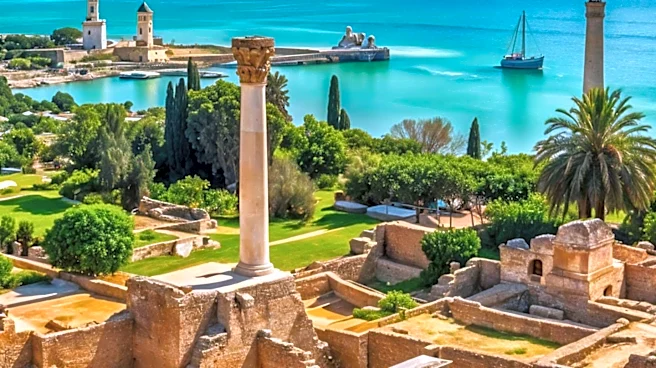
Tunisia's tourism sector has demonstrated significant growth, with revenues reaching 7.152 billion dinars by the end of October 2026. This figure represents a 3.4% increase compared to the same period in 2025 and a substantial 25.1% rise when compared to 2019.
Sofien Tkaya, the Minister of Tourism and Traditional Industries, announced these figures during a joint general session of the House of People's Representatives and the National Council of Regions and Districts, which focused on the ministry's role in the 2027 state budget. The number of non-resident visitors to Tunisia also reached approximately 9 million by October 2026. Domestic tourism consumption is projected to reach 17.47 billion dinars in 2025, up from 16.1 billion dinars in 2024 and 14.6 billion dinars in 2023. This consumption in 2025 is divided between non-resident visitor expenditures (12.8 billion dinars) and resident domestic tourism expenditures (4.7 billion dinars). The European market remains dominant, accounting for 64.8% of tourism revenues in 2025, with France leading, followed by Germany, Poland, Italy, and the UK. Revenues from the Russian market saw an increase of over 83%, while Japanese and Chinese markets each exceeded 40 million dinars in revenue.
Why It's Important?
The robust growth in Tunisia's tourism sector is crucial for the nation's economy, indicating a strong recovery and expansion beyond pre-pandemic levels. The significant increase in revenues and visitor numbers suggests enhanced economic stability and job creation within the hospitality, travel, and related traditional industries. The focus on attracting high-spending visitors, as highlighted by Minister Tkaya, aims to improve the economic efficiency of tourism activities, thereby increasing added value and boosting the income of tourism establishments. This strategic shift from merely increasing visitor numbers to enhancing economic returns per visitor can lead to more sustainable and profitable growth for the sector. The strong performance of European markets, coupled with emerging growth from Russian, Japanese, and Chinese tourists, diversifies Tunisia's tourism base, making it less vulnerable to fluctuations in any single market. This diversification can provide a more resilient economic foundation for the country, supporting its overall GDP and foreign exchange earnings.
What's Next?
The Tunisian Ministry of Tourism and Traditional Industries plans to continue its strategy of not only attracting a larger volume of tourists but also focusing on improving the economic returns from tourism activities. This involves targeting visitors with higher spending capacities to maximize the sector's contribution to the national economy. Future initiatives are likely to include marketing campaigns aimed at these high-value segments and further development of tourism infrastructure and services to cater to their needs. The continued monitoring of market trends, particularly in the growing Russian, Japanese, and Chinese markets, will be essential for tailoring future tourism offerings and promotional efforts. The government will likely continue to support policies that enhance the competitiveness of Tunisian tourism, potentially through investment incentives for tourism businesses and training programs for industry professionals. The goal is to elevate the added value generated by the sector and strengthen its overall contribution to Tunisia's economic growth.
Beyond the Headlines
The strategic shift in Tunisia's tourism policy towards attracting high-spending visitors rather than just increasing overall numbers reflects a broader global trend in sustainable tourism development. This approach aims to mitigate the potential negative impacts of mass tourism, such as environmental strain and cultural dilution, while maximizing economic benefits. By focusing on quality over quantity, Tunisia can cultivate a more premium tourism brand, potentially leading to higher-paying jobs and greater investment in high-end services and infrastructure. This could also encourage the preservation of cultural heritage and natural landscapes, as these become key attractions for discerning travelers. The success of this strategy could serve as a model for other developing nations looking to leverage their tourism potential responsibly. Furthermore, the diversification of source markets, particularly the significant growth from Russia, Japan, and China, indicates a geopolitical and economic rebalancing, as Tunisia strengthens ties with non-traditional partners, potentially opening new avenues for trade and cultural exchange beyond tourism.