





What's Happening?
The U.S. is facing renewed trade policy uncertainty and rising tariff rates, particularly with Canada, which threaten to increase costs for American businesses and consumers. After a period of relative calm, tariff escalations are taking effect, potentially
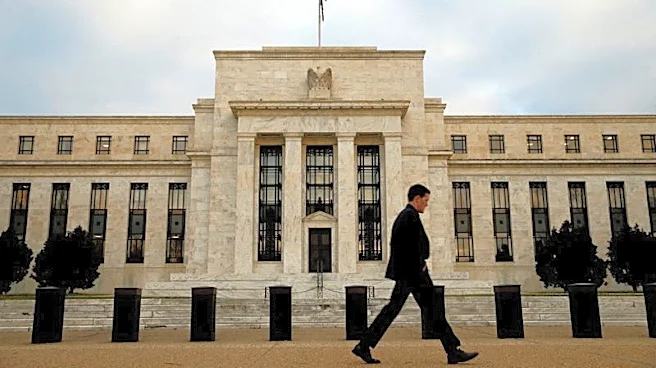
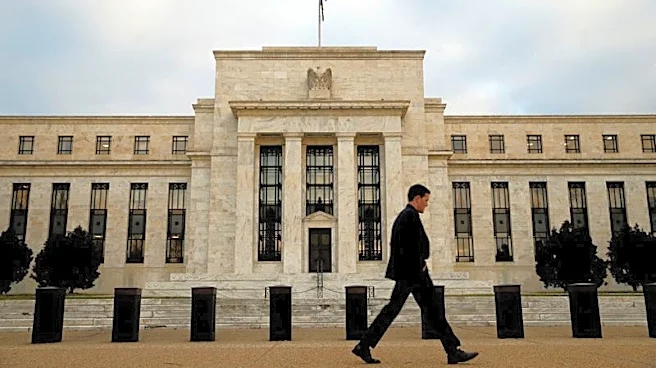
disrupting economic ties with major trading partners. This situation is expected to fuel inflationary pressures, already exacerbated by ongoing international conflicts, and could lead to higher borrowing costs. The Federal Reserve's Beige Book has noted that manufacturers are raising prices due to tariffs and fuel costs, and new construction projects are facing delays. The Trade Policy Uncertainty Index, which tracks trade policy volatility, has recently risen by nearly 25 percent, indicating a resurgence of uncertainty. While some larger firms may mitigate direct tariff costs through lobbying or compliance, smaller businesses are more vulnerable. The Trump administration's trade policies are creating a self-imposed political crisis, undermining its own economic objectives.
Why It's Important?
The resurgence of trade policy uncertainty and rising tariffs pose significant risks to the U.S. economy. Increased direct and indirect costs from tariffs will likely be passed on to consumers through higher retail prices, or absorbed by businesses, leading to reduced profits or even bankruptcies. This inflationary pressure could prompt the Federal Reserve to further raise interest rates, increasing borrowing costs across the economy. This is particularly critical for the AI industry, which has been a major driver of recent U.S. economic growth but relies heavily on debt financing for infrastructure projects. Higher borrowing costs could lead to a financial crunch for AI firms and their suppliers, potentially stifling innovation and growth in this key sector. Furthermore, retaliatory tariffs from countries like Canada harm U.S. producers by shrinking export demand, undermining the stated goal of revitalizing American manufacturing.
What's Next?
The incoming 120th U.S. Congress in the next year will have opportunities to address the current tariff policies. Potential actions include providing oversight in the creation and enforcement of tariff policies to ensure stability and fairness for businesses. Congress could also pass legislation to limit the Executive Branch's authority in enacting tariffs under questionable legal grounds. Additionally, a comprehensive industrial strategy that combines targeted tariffs with public investment in job creation could be pursued to protect the U.S. manufacturing base. Without such policy corrections, the current trajectory of tariff escalation is likely to deepen policy uncertainty, continue to raise costs for U.S. businesses and households, and impede economic growth, including the burgeoning AI sector. The outcome of negotiations with trade partners in the coming months will also determine the extent of new tariffs on imported industrial robots and machinery.
Beyond the Headlines
The current trade policy environment highlights a deeper tension between protectionist measures and broader economic stability. While tariffs are often framed as tools to protect domestic industries and workers, their implementation can lead to unintended consequences, such as increased inflation, reduced consumer purchasing power, and stifled innovation in critical sectors like AI. The reliance of AI companies on debt financing makes them particularly vulnerable to interest rate hikes driven by tariff-induced inflation, potentially creating a financial bubble risk. The ability of larger firms to mitigate tariff costs through lobbying also raises questions about fairness and equitable impact across businesses of different sizes. This situation underscores the complex interplay between trade policy, monetary policy, and technological advancement, suggesting that a balanced approach is crucial for sustainable economic growth and competitiveness.