



What's Happening?
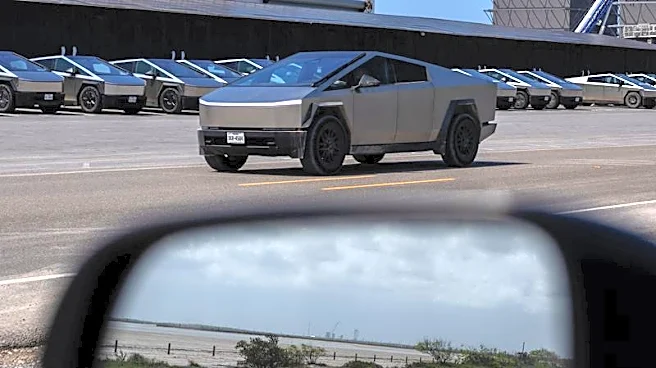
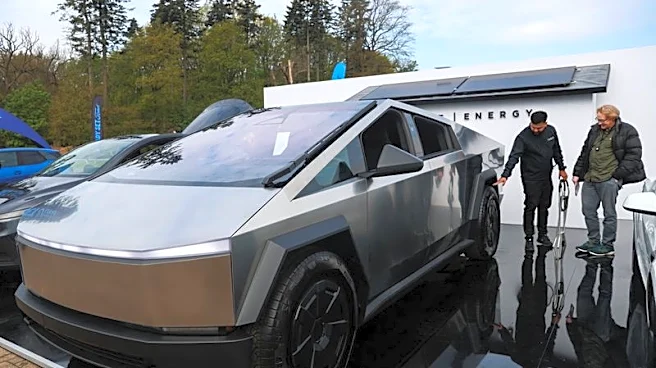
Tesla plans to equip its Cybercab with a 40 kWh battery pack and offer a Liquid Silver finish, according to statements from CEO Elon Musk. These details were reported by Electric Vehicles, which noted that Musk did not provide an introduction date, range
figures, or production timing for these features. The 40 kWh pack is contingent on 'efficiency improvements coming' that will 'allow' for a smaller pack, indicating it is a future plan rather than a current production specification. Similarly, the Liquid Silver finish is a stated intent to diversify color options. Despite some headlines suggesting personal sales, available reporting indicates that Tesla has not opened orders for individual buyers and has only provided an official path for businesses. The Cybercab's published dimensions include a two-seat layout, 20.2 cubic feet of rear trunk space, a 16.3-inch step-in height, 5.7 inches of ground clearance, a 69-inch width, and a 55.4-inch height.
Why It's Important?
These planned specifications for the Cybercab are significant for Tesla's strategic shift towards autonomous ride-sharing services. A smaller 40 kWh battery pack, if achieved through efficiency improvements, could substantially reduce the vehicle's cost and weight, making it more economical for fleet operations. This aligns with the company's reported intention to wind down Cybertruck production and focus more on the Cybercab. The emphasis on a purpose-built two-seat autonomous vehicle, optimized for short-distance travel, differentiates Tesla's approach from converting existing passenger cars into robotaxis. For the automotive industry, this signals a potential future where specialized vehicles dominate the autonomous ride-sharing market, prioritizing operational efficiency and cost-effectiveness over traditional consumer vehicle attributes like long range or personal ownership options.
What's Next?
The immediate next steps involve waiting for Tesla to provide concrete details regarding the 40 kWh battery pack and Liquid Silver finish. This includes official confirmation of production specifications, introduction dates, and pricing. The company's official website or regulatory filings would be the most reliable sources for such information. Until then, the 40 kWh pack remains a plan dependent on future efficiency gains, and the Liquid Silver finish is an announced intent without an availability date. The question of personal sales will likely remain unconfirmed until Tesla publishes an order page, configurator, or official price for individual buyers. Industry observers will also be watching for any updates on the Cybercab's range and charging capabilities, which are crucial for its viability as a robotaxi.
Beyond the Headlines
The Cybercab's development, particularly the focus on a smaller battery and purpose-built design, highlights a broader industry trend towards optimizing electric vehicles for specific use cases. For robotaxis, a smaller, more efficient battery pack is a logical choice, as it reduces upfront costs and operating expenses, even if it means a shorter range. This contrasts with consumer EVs, where range anxiety often drives demand for larger battery capacities. The lack of confirmed dates and personal sales options for the Cybercab also underscores the cautious approach companies take when introducing disruptive technologies, especially in highly regulated sectors like autonomous driving. This strategy allows Tesla to refine the technology and business model for fleet deployment before potentially opening it up to individual consumers, mitigating risks and ensuring a more controlled rollout of its autonomous services.