


What's Happening?
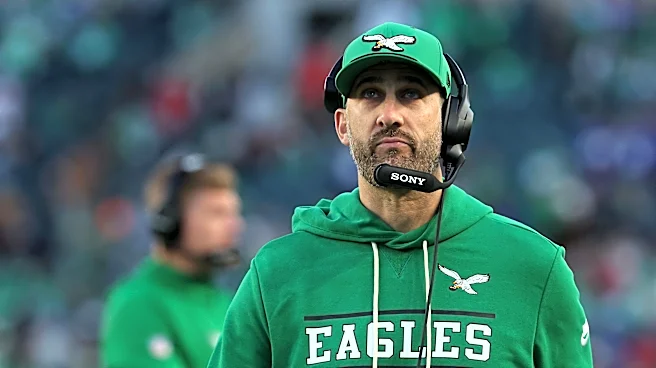
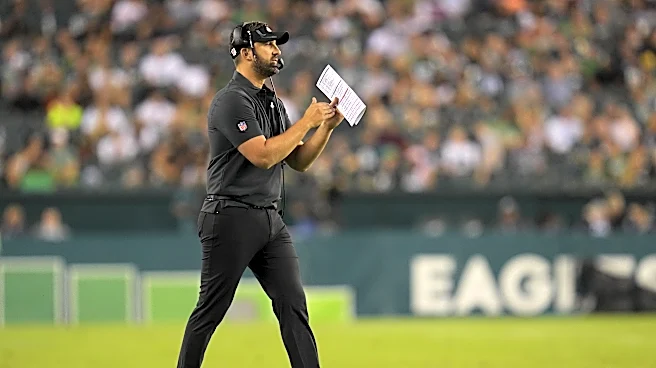
The Philadelphia Eagles are facing scrutiny regarding their draft pick accumulation and current coaching staff, particularly concerning the offensive line and quarterback development. The team's current draft stockpile includes multiple first and second-round
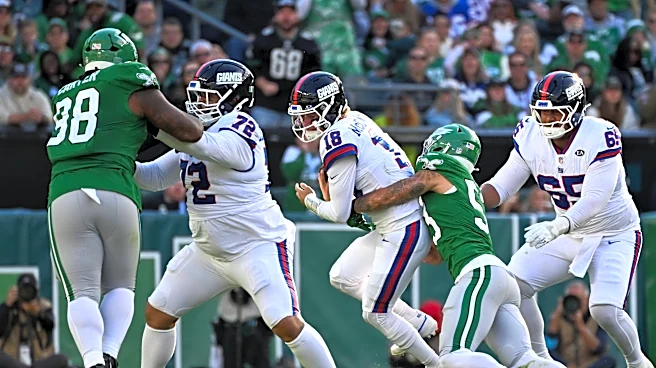
picks in upcoming years, a strategy that is historically unprecedented for the franchise. For instance, the Eagles have never had 10 picks in the first two rounds over a three-year period, nor five first-round picks in a three-year span. This comes as the team's offensive line performance has declined, with new offensive line coach Chris Kuper facing criticism for communication issues and player regression. Additionally, the decision to start quarterback Joe Milton just 23 days after he joined the team and with only 10 practices is being questioned, with observations suggesting he was unprepared for an NFL start. The team's overall performance has also seen a significant drop in fourth-down conversion rates compared to previous seasons.
Why It's Important?
The Eagles' aggressive draft strategy, accumulating numerous high-value picks, indicates a long-term rebuilding or retooling approach, which could significantly impact the team's future competitiveness and roster construction. This strategy suggests a focus on securing young talent and potentially using these picks as trade capital, a common practice in the NFL to acquire established players or move up in the draft. The struggles of the offensive line and the perceived unpreparedness of a starting quarterback highlight immediate performance issues that could jeopardize the team's current season and fan confidence. The decline in fourth-down efficiency points to broader offensive struggles and potentially flawed play-calling or execution, which can directly affect game outcomes and the team's playoff aspirations. These internal challenges could lead to significant personnel changes, both on the coaching staff and playing roster, in the near future.
What's Next?
The Eagles' management will likely face increasing pressure to address the team's performance issues, particularly concerning the offensive line and quarterback development. While a coaching change for the offensive line is not immediately expected, the article suggests that assistant offensive line coach Greg Austin, with his connection to former successful coach Jeff Stoutland, could be considered for a more prominent role. The team's extensive draft capital provides flexibility for future roster moves, including potential trades or high-impact draft selections. Decisions regarding the long-term development of young quarterbacks like Joe Milton will be crucial, potentially involving more extensive preparation periods before being thrust into starting roles. The team's ability to improve its fourth-down conversion rate and overall offensive efficiency will be a key indicator of potential mid-season adjustments and the effectiveness of the coaching staff.
Beyond the Headlines
The Eagles' current situation reflects a broader challenge in professional sports: balancing immediate competitive demands with long-term strategic planning, especially concerning player development and coaching stability. The accumulation of draft picks, while offering future potential, also places a significant burden on the scouting and player development departments to maximize the value of these selections. The criticism of the offensive line coaching and quarterback preparation underscores the intricate relationship between coaching philosophy, player readiness, and on-field performance. The article also subtly highlights the increasing reliance on advanced analytics and external experts, as seen in the Bengals' near-trade for Arnold Ebiketie being averted by a tweet from a compensation pick expert. This suggests a growing influence of data-driven insights in NFL decision-making, potentially shifting traditional team management approaches.