





What's Happening?
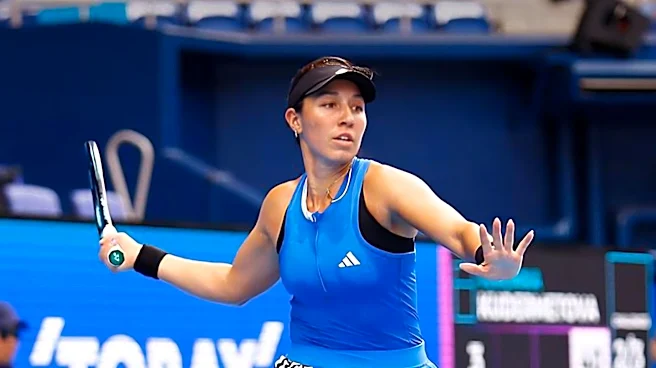
American tennis star Jessica Pegula has issued private apologies after her comments referring to fellow player Mirra Andreeva as a 'diva' were inadvertently broadcast during a practice session at Indian Wells. The conversation, which included Pegula and
her coach Mark Knowles, was picked up by a courtside microphone and streamed on the WTA's official YouTube channel before circulating on social media. Pegula's remarks centered on Andreeva's interaction with her coach, Conchita Martinez, with Pegula expressing a loss of respect for Martinez's handling of Andreeva's behavior. The WTA has since apologized for the incident, taking responsibility for not informing players that practice-court microphones were active, and has removed the recordings from YouTube. Pegula, a member of the WTA Players' Council, was reportedly unaware her discussion was being livestreamed.
Why It's Important?
This incident highlights significant concerns regarding player privacy within professional sports, particularly as organizations seek to increase fan access through behind-the-scenes content. The WTA's apology and removal of the footage underscore the delicate balance between fan engagement and protecting athletes' private conversations. For players, the event raises questions about the extent to which their interactions, even in seemingly private settings, can be monitored and broadcast without their knowledge or consent. This could lead to increased scrutiny over the use of microphones during practice sessions and potentially influence how players communicate in such environments. The situation also puts Jessica Pegula, a prominent figure and member of the WTA Players' Council, in an uncomfortable position, potentially impacting her relationships with other players and her role in advocating for player welfare.
What's Next?
The immediate aftermath will likely see continued discussions within the WTA regarding microphone protocols and player privacy policies. The incident occurred just days before the WTA Finals, where both Pegula and Andreeva are scheduled to compete, potentially leading to an awkward atmosphere if they encounter each other. While Andreeva has not publicly addressed Pegula's remarks, the situation could influence dynamics within the tournament. The WTA may face pressure to implement clearer guidelines and better communication with players about recording practices to prevent similar incidents in the future. This event could also prompt other sports organizations to review their own policies on broadcasting private conversations during training or practice sessions.
Beyond the Headlines
Beyond the immediate privacy concerns, this event touches upon the broader ethical implications of reality-style content in professional sports. The desire to provide fans with 'unfiltered' access can inadvertently expose private moments and opinions, leading to unintended consequences for athletes. It also raises questions about the responsibility of media platforms and sports organizations in curating and disseminating content, especially when it involves potentially sensitive or critical remarks. The incident could spark a wider debate about the boundaries of transparency in sports and the psychological impact on athletes who are constantly under public scrutiny, even in what they perceive as private moments. This could lead to a re-evaluation of how 'access' is defined and managed in the digital age of sports broadcasting.