







What's Happening?
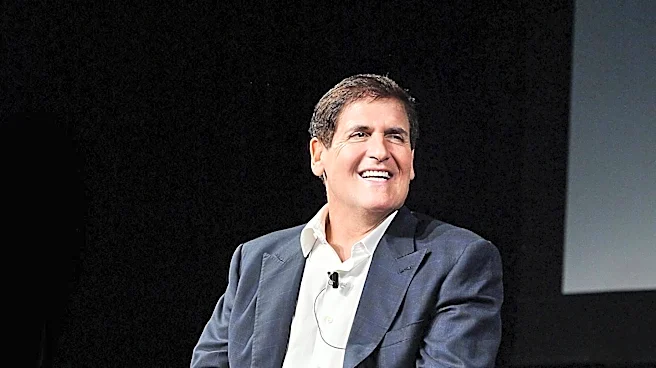
Billionaire investor Mark Cuban has highlighted five job categories that he believes are most at risk from the rise of artificial intelligence (AI). These include entry-level jobs with repetitive tasks, junior software developers, customer service roles,
research and data analyst positions, and finance and legal support jobs. Cuban argues that AI will automate many routine tasks, reducing the need for human workers in these areas. He emphasizes the importance of adapting to these changes by acquiring skills that complement AI, rather than competing with it. Cuban's insights reflect a broader trend of AI integration into various industries, reshaping the job market.
Why It's Important?
The potential impact of AI on the job market is significant, as it could lead to job displacement in sectors that rely heavily on routine tasks. This shift necessitates a reevaluation of workforce skills and education to prepare for a future where AI plays a central role. Industries may need to invest in retraining programs to help workers transition to roles that require more complex, non-automatable skills. The economic implications are vast, as the adoption of AI could lead to increased productivity and efficiency, but also to challenges in employment and income distribution.
What's Next?
As AI continues to evolve, businesses and educational institutions may need to collaborate to develop training programs that equip workers with the skills needed in an AI-driven economy. Policymakers might also consider implementing measures to support workers affected by AI-related job displacement, such as unemployment benefits or job placement services. The ongoing dialogue about AI's role in the workforce will likely influence future labor policies and economic strategies.
Beyond the Headlines
The rise of AI raises ethical questions about the future of work and the responsibility of companies to their employees. There is a need to consider how AI can be used to enhance human capabilities rather than replace them entirely. Additionally, the societal impact of AI, including potential increases in inequality and changes in the nature of work, will require careful consideration and proactive management.