






What's Happening?
Multifamily owner and developer Middleburg Communities has finalized a lease for 27,800 square feet at 1800 Tysons Blvd., a property owned by Lerner Enterprises within the Tysons II master-planned development. This move signifies Middleburg Communities'
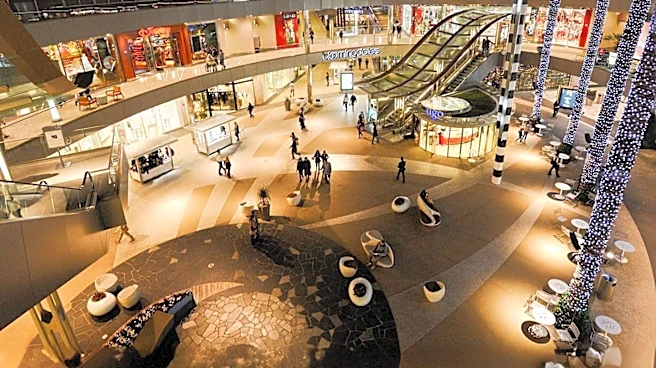
relocation of its headquarters from Vienna to Tysons. The lease agreement was disclosed in Cushman & Wakefield’s third-quarter report, and Middleburg Communities subsequently confirmed the deal. According to Chris Finlay, founder and CEO of Middleburg, the new Tysons location offers improved proximity to partners and investors, enhances employee commute convenience, and provides a better environment for fostering company culture. Middleburg Communities has experienced significant growth in recent years, necessitating a new headquarters to support its future trajectory, while remaining committed to Northern Virginia. The 320,000 square-foot office tower at 1800 Tysons Blvd. was developed by Lerner Enterprises in 2005 as part of its 117-acre Tysons II development, which also includes Tysons Galleria and The Ritz Carlton Hotel. Other notable tenants in the building include JLL’s Northern Virginia office, financial services firms Houlihan Lokey and UBS, and law firm Littler Mendelson, along with a Founding Farmers restaurant on the ground floor.
Why It's Important?
This headquarters relocation by Middleburg Communities highlights the continued appeal of Tysons as a prime business hub in Northern Virginia, despite broader office market challenges. The move by a growing multifamily developer to a prominent office tower signals confidence in the submarket's infrastructure and accessibility. For Lerner Enterprises, securing a significant lease with Middleburg Communities reinforces the value and attractiveness of its Tysons II development, contributing to the occupancy of its 1800 Tysons Blvd. property. The decision by Middleburg to prioritize proximity to partners and investors, along with employee convenience and cultural development, reflects evolving corporate real estate strategies focused on talent retention and operational efficiency. This transaction also contributes to the overall economic activity in Tysons, a submarket that experienced nearly 80,000 square feet of positive net absorption for office product during the third quarter, as per Cushman & Wakefield's report, even as it grapples with a 26.8% office vacancy rate, which is higher than Northern Virginia’s overall rate.
What's Next?
Middleburg Communities will proceed with the transition of its headquarters to the new Tysons location. The company did not disclose the exact timeline for the move or the amount of space it previously occupied in Vienna. This relocation may lead to further consolidation or adjustments in the Tysons office market as other companies evaluate their real estate needs. The continued leasing activity in Tysons, exemplified by this deal, suggests that well-located, high-quality office spaces can still attract tenants, even in a challenging market. Future reports from real estate firms like Cushman & Wakefield will likely track the impact of such moves on Tysons' office vacancy rates and absorption figures. The presence of multiple prominent firms in 1800 Tysons Blvd. could also foster increased business interactions and collaborations within the building, potentially creating a more dynamic corporate environment.
Beyond the Headlines
The decision by Middleburg Communities to invest in a new headquarters in Tysons reflects a broader trend among companies seeking to optimize their physical workspaces to support strategic growth and employee well-being. In an era where remote and hybrid work models are prevalent, the emphasis on creating a desirable office environment that fosters culture and collaboration is increasingly critical. This move also underscores the enduring value of master-planned developments like Tysons II, which offer a comprehensive ecosystem of office, retail, and hospitality amenities, making them attractive to businesses. The continued investment in such developments by entities like Lerner Enterprises suggests a long-term vision for creating integrated urban centers that can adapt to changing corporate demands. The competition for prime office space in key submarkets like Tysons will likely intensify as companies re-evaluate their post-pandemic real estate footprints, prioritizing quality and strategic location.