






What's Happening?
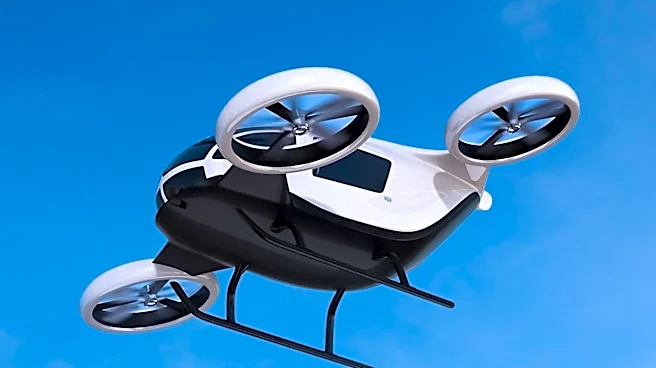
Archer Aviation, a San Jose-based air taxi startup, has partnered with defense technology company Anduril to unveil a new aircraft called Thunder at the Farnborough International Airshow in Hampshire, England. The aircraft is designed for both military
and commercial uses, featuring a hybrid powertrain that allows for longer range and precision in various flight conditions. This development marks a significant step for Archer as it seeks to expand its market beyond urban air taxi services. The company plans to introduce a commercial version of Thunder later this week. Archer has been exploring military partnerships to mitigate financial losses, having reported a $217.7 million loss in the first quarter of 2026. The company aims to launch its air taxi service by 2026, with Abu Dhabi as a potential first market.
Why It's Important?
The introduction of Thunder represents a strategic pivot for Archer Aviation as it seeks to diversify its offerings and tap into the lucrative defense sector. By collaborating with Anduril, Archer can leverage military contracts to offset the financial challenges faced by the air taxi industry, which has struggled to gain regulatory approvals for commercial operations. This move could set a precedent for other air taxi companies to explore hybrid models and military applications, potentially reshaping the landscape of urban and defense aviation. The success of such initiatives could accelerate the adoption of electric vertical takeoff and landing (eVTOL) technology, influencing both commercial and military aviation sectors.
What's Next?
Archer plans to unveil a commercial version of the Thunder aircraft later this week, which could attract interest from various sectors looking for innovative transportation solutions. The company's focus on military partnerships may lead to further collaborations with defense contractors, potentially resulting in new contracts and revenue streams. As Archer prepares to launch its air taxi service, regulatory approvals and market acceptance will be critical factors in determining the success of its commercial operations. The outcome of these efforts could influence the broader adoption of eVTOL technology in both civilian and military contexts.