






What's Happening?
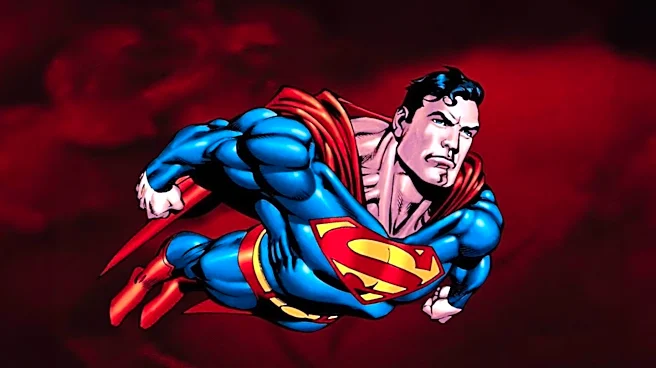
Brainiac, a prominent adversary of Superman, has a complex and evolving origin story within DC Comics. Initially introduced in Action Comics #242 in 1958 as an extraterrestrial collector, his character has undergone several significant revisions. In 1964,
Superman #167 recast him as an agent of Colu’s Computer Tyrants. A Post-Crisis reformulation introduced an alien mind overtaking human mentalist Milton Fine. Geoff Johns and Gary Frank’s 2008 'Superman: Brainiac' arc further developed the character as a Coluan original who augments himself and projects copies of his consciousness into mechanical drones, meaning Superman often encountered duplicates rather than the original entity. Brainiac's primary ability involves his genius intellect and alien technology, notably his capacity to shrink and bottle cities, such as Paris and Kandor, for his collection, preserving them while removing them from their original locations.
Why It's Important?
The shifting origins and powers of Brainiac are important because they highlight the dynamic nature of comic book storytelling and character development. These revisions allow for fresh interpretations and keep the character relevant across different eras, reflecting evolving narrative trends and scientific understanding. Brainiac's unique method of collecting cities, rather than simply destroying them, presents a more complex moral dilemma for Superman, forcing him to consider rescue and preservation over mere combat. This aspect of Brainiac's character, particularly with the bottled city of Kandor, adds a layer of personal tragedy and ethical complexity to Superman's narrative, as it involves the survival of a piece of his lost world under the control of his enemy. This complexity enriches the superhero genre by moving beyond simplistic good-versus-evil tropes.
What's Next?
Given the history of Brainiac's evolving character, future interpretations in comics, films, and television are likely to continue to explore and redefine his origins and abilities. Storytellers may choose to emphasize different aspects of his character, such as his technological prowess, his intellectual superiority, or the ethical implications of his city-collecting activities. The concept of his consciousness being projected into drones offers a versatile narrative tool, allowing for multiple encounters without necessarily defeating the 'original' Brainiac. Adaptations like 'Superman: Unbound' (2013) demonstrate how these complex origins can be translated to screen, suggesting that future media will continue to adapt and re-imagine Brainiac to suit contemporary storytelling needs and audience expectations, ensuring his continued role as a formidable and intellectually challenging foe for Superman.
Beyond the Headlines
Brainiac's character delves into profound philosophical questions about knowledge, control, and the nature of existence. His desire to collect and preserve cities, albeit through abduction, raises ethical questions about the value of survival under duress versus freedom. The case of Kandor, a Kryptonian city bottled by Brainiac before Krypton's destruction, forces Superman to confront the uncomfortable truth that his enemy inadvertently preserved a part of his heritage. This scenario challenges the simplistic view of good and evil, suggesting that beneficial outcomes can arise from malevolent actions, complicating the hero's moral framework. Brainiac's character, therefore, serves as a vehicle for exploring the complexities of unintended consequences, the ethics of preservation, and the definition of true liberation, making him a more intellectually stimulating antagonist than many traditional villains.