








What's Happening?
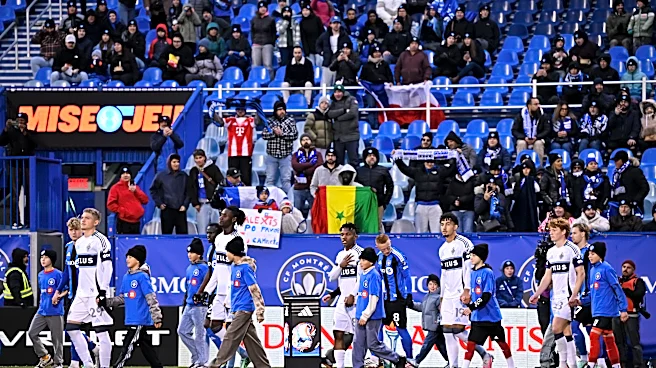
The Saputo family has initiated the process to sell CF Montreal, their Major League Soccer (MLS) club, after owning it since 1992. The announcement was made on Monday, marking a significant shift for the club that joined MLS in 2012. Joey Saputo stated
that after over three decades of commitment, it is the appropriate time to identify new ownership. While the family expressed a preference for the team to remain in Montreal, they did not rule out the possibility of new ownership relocating the club. This decision comes after CF Montreal experienced its worst MLS season, finishing last in the Eastern Conference with a record of 6-20-8. Despite the team's recent performance, Saputo asserted that the decision to sell was not driven by financial concerns or the club's on-field results.
Why It's Important?
The potential sale of CF Montreal introduces significant uncertainty regarding the club's future in its home city, impacting its fanbase, local economy, and the broader MLS landscape. A relocation would be a major blow to Montreal's sports community, potentially alienating loyal supporters and diminishing the city's presence in professional soccer. For MLS, the sale and potential relocation highlight the ongoing challenges of team stability and market viability, especially for clubs that struggle with performance or financial sustainability. The situation could influence how the league approaches future expansion and ownership transitions, emphasizing the importance of securing committed owners who are deeply rooted in their respective communities. The outcome of this sale will be closely watched by other MLS clubs and potential investors, as it could set a precedent for how ownership changes and relocation discussions are handled within the league.
What's Next?
The Saputo family will now begin the process of identifying potential buyers for CF Montreal. This will involve evaluating offers and engaging in negotiations with interested parties. A key factor in these discussions will be the buyer's commitment to keeping the team in Montreal, although the Saputo family has indicated this is not a definitive condition. The MLS league office will likely be involved in vetting potential owners to ensure they meet the league's financial and operational standards. The sale process could take several months, during which time the club's operational decisions and long-term planning may be affected. Fans and local government officials in Montreal will likely advocate for the team to remain in the city, potentially exploring options to support local ownership groups. The future direction of CF Montreal, including its roster, coaching staff, and strategic vision, will largely depend on the new ownership's plans.
Beyond the Headlines
The decision to sell CF Montreal, despite claims of no financial distress, could signal underlying complexities in operating a professional soccer club in certain markets. It raises questions about the long-term sustainability models for MLS franchises, particularly those in smaller markets or those experiencing prolonged periods of poor performance. The potential for relocation, even if not preferred, underscores the business realities of professional sports, where ownership changes can lead to significant shifts in a team's identity and geographic ties. This situation also highlights the emotional connection between sports teams and their communities, where a club is often seen as more than just a business asset. The sale process will test the resolve of the Montreal fanbase and local stakeholders to retain their team, potentially galvanizing community efforts to secure local ownership and ensure the club's continued presence in the city. It also serves as a reminder of the delicate balance between business interests and community loyalty in professional sports.