






What's Happening?
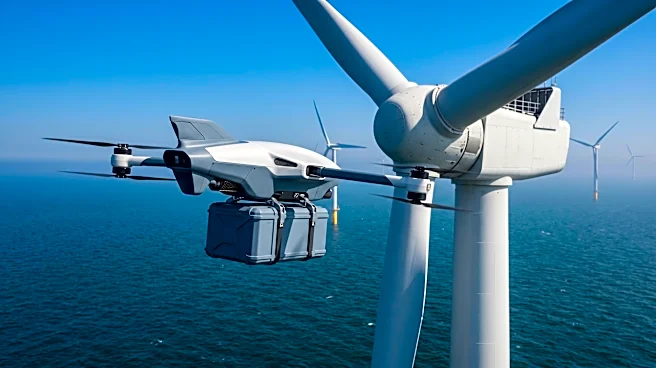
Ørsted, a global leader in renewable energy, has successfully concluded a four-week trial involving large cargo drones for delivering maintenance kits to turbines at its Hornsea 2 offshore wind farm in the North Sea. Collaborating with Skyports Drone
Services, the initiative aimed to evaluate the potential of drones to reduce routine vessel trips and enhance maintenance efficiency. The trial featured an automatic hook system, enabling drones to collect cargo without manual intervention. Each maintenance kit, weighing approximately 55–65 kg, contained essential tools, spare parts, and materials for specific turbine tasks. These kits were transported to turbines before technicians arrived and were subsequently collected by drone for return to a service operations vessel upon task completion. This method allows turbines to continue generating electricity during deliveries, minimizes manual lifting, and potentially decreases vessel movements, fuel consumption, emissions, and operational costs. The trial also achieved the team’s first beyond visual line of sight (BVLOS) delivery within the wind farm, covering a distance of approximately 4 km. The flight was meticulously planned, coordinated, and monitored from a specialized service vessel, with support from the UK Civil Aviation Authority for airspace approvals.
Why It's Important?
This drone trial represents a significant step forward in optimizing the operational efficiency and sustainability of offshore wind farms. By reducing the reliance on traditional vessel-based logistics, Ørsted can potentially lower operational costs, decrease carbon emissions associated with marine transport, and improve the overall uptime of wind turbines. Enhanced efficiency in maintenance translates directly to more consistent energy production, which is crucial for meeting renewable energy targets and ensuring grid stability. The ability to deliver parts and tools more quickly and safely can minimize the time turbines are offline for repairs, thereby maximizing their energy output. Furthermore, the successful implementation of beyond visual line of sight operations demonstrates the growing maturity and safety of drone technology for industrial applications, paving the way for broader adoption in challenging environments. This innovation could set a new standard for maintenance practices in the renewable energy sector, influencing how other offshore energy projects approach logistics and operational management.
What's Next?
Following the successful trial, Ørsted and Skyports Drone Services will likely analyze the comprehensive data collected to assess the full economic and operational benefits of integrating drone deliveries into routine offshore maintenance activities. This analysis will inform decisions regarding the broader deployment of this technology across Ørsted's wind farm portfolio and potentially influence industry-wide best practices. Future steps may include developing more advanced drone capabilities, such as increased payload capacity or extended flight ranges, to handle a wider array of maintenance tasks. Regulatory frameworks for drone operations in offshore environments may also evolve as this technology becomes more prevalent, with the UK Civil Aviation Authority's involvement in this trial indicating a proactive approach to supporting such innovations. The success of this trial could also spur further research and development into autonomous solutions for renewable energy infrastructure, aiming for even greater automation and efficiency in operations and maintenance.
Beyond the Headlines
The successful integration of cargo drones into offshore wind farm maintenance highlights a broader trend towards automation and digitalization in the energy sector. This shift is not merely about efficiency but also about enhancing safety by reducing human exposure to hazardous offshore conditions and addressing labor shortages in specialized roles. The development of such technologies underscores the increasing sophistication required to manage complex renewable energy assets and the potential for cross-industry innovation, drawing on expertise from aerospace and logistics. Moreover, this initiative contributes to the long-term sustainability goals of the renewable energy industry by minimizing the environmental footprint of maintenance operations. The ability to conduct maintenance with greater precision and less disruption could also extend the lifespan of critical infrastructure, further solidifying the economic viability of offshore wind as a cornerstone of future energy systems. This technological advancement could also inspire similar applications in other remote or challenging industrial settings.