
What's Happening?
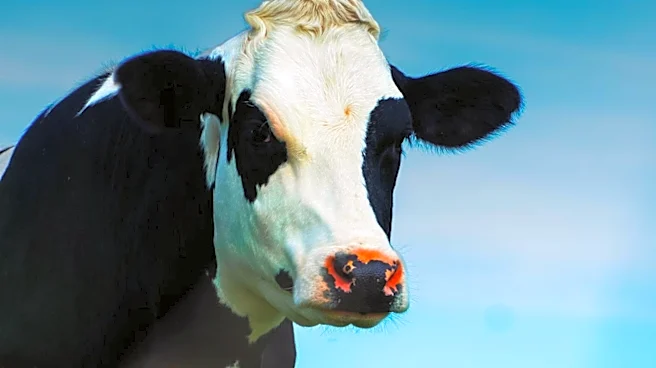
The United States Department of Agriculture (USDA) announced plans to lift the suspension on Mexican cattle imports starting August 24, 2026. This decision comes after more than a year of restrictions
due to the spread of the New World screwworm in Mexico. The initial reopening will occur at the Douglas, Arizona border crossing, with plans to subsequently reopen crossings in New Mexico. Despite the ban, screwworm cases have been reported in Texas and southeastern New Mexico. The USDA has outlined a joint action plan with Mexico to ensure cattle imports are safe, requiring inspections to prevent screwworm larvae entry. Mexican President Claudia Sheinbaum expressed readiness to resume cattle movement, emphasizing cooperation between the two nations. The Mexican livestock sector has faced significant financial losses due to the suspension.
Why It's Important?
The resumption of Mexican cattle imports is crucial for restoring trade relations and addressing economic challenges faced by the livestock industry. The prolonged suspension disrupted supply chains, affecting both U.S. and Mexican cattle markets. By implementing a phased reopening and joint action plan, the USDA aims to balance trade restoration with biosecurity measures. This move is expected to alleviate economic pressures on cattle producers and support the agricultural sector's recovery. The decision also highlights the importance of international cooperation in managing cross-border agricultural issues.
What's Next?
As the USDA begins lifting the suspension, stakeholders will closely monitor the effectiveness of the joint action plan in preventing screwworm spread. The phased reopening will require ongoing collaboration between U.S. and Mexican authorities to ensure compliance with safety protocols. The livestock industry will likely advocate for further measures to safeguard against future outbreaks. Additionally, the economic impact of the reopening will be assessed, with potential adjustments to trade policies based on the outcomes of the initial phase.