

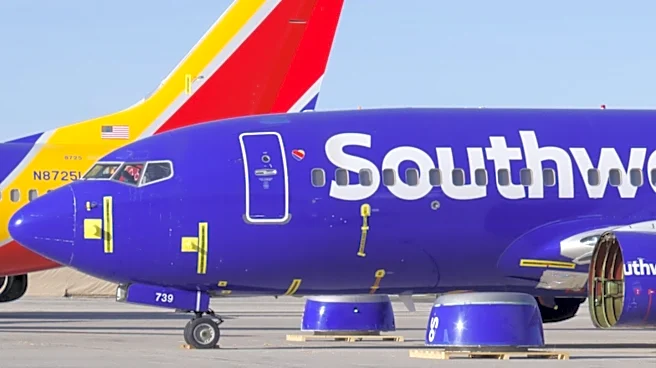
What's Happening?
The Federal Aviation Administration (FAA) has issued a directive requiring inspections of 471 Boeing 737 MAX aircraft registered in the U.S. for potential structural cracks near the forward galley door. This action follows reports of similar issues in older
737 models. The directive, effective September 10, does not ground the aircraft but mandates detailed inspections to ensure structural integrity. The inspections are crucial for maintaining safety standards, especially for airlines like Southwest, which operates a significant number of 737 MAX jets.
Why It's Important?
The FAA's directive underscores ongoing safety concerns with Boeing's 737 MAX series, which has faced scrutiny following past incidents. Ensuring the structural integrity of these aircraft is vital for passenger safety and maintaining confidence in Boeing's fleet. The inspections could impact airline operations, particularly for carriers heavily reliant on the 737 MAX, potentially leading to increased maintenance costs and operational adjustments. This development highlights the importance of rigorous safety protocols in the aviation industry.
What's Next?
Airlines will need to comply with the FAA's inspection schedule, which may involve additional maintenance work if cracks are detected. The FAA and Boeing will continue to monitor the situation, potentially leading to further directives if necessary. Airlines are expected to integrate these inspections into their regular maintenance cycles to minimize disruption. The aviation industry will be watching closely to see how Boeing addresses these structural concerns and whether further design modifications are required.