






What's Happening?
Denver-based agricultural consultant Benedict T. Palen, Jr. is leveraging five generations of family farming heritage to provide strategic guidance to agribusinesses across the United States. With over 30 years of experience in agricultural investments,
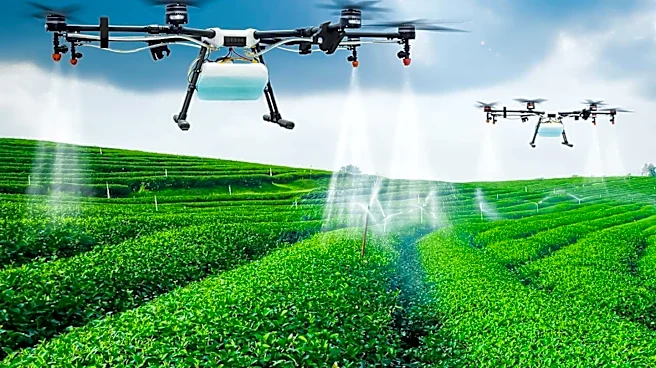
farm management, and operations, Palen Jr. focuses on translating complex agricultural, financial, and policy considerations into practical advice for farm operators. His consulting work addresses core areas such as farm economics, risk management, and long-term financing decisions, particularly as commodity markets remain volatile and input costs fluctuate. He also emphasizes sustainable land management, soil health, and resource stewardship, principles he attributes to his family's multigenerational farming background. Palen Jr. aims to help producers modernize their operations by integrating data-driven decision-making and precision agriculture, while maintaining fundamental practices that have sustained family farms for generations.
Why It's Important?
This approach is crucial for the U.S. agricultural sector, which faces increasing complexities from market volatility, rising input costs, and the need for sustainable practices. Palen Jr.'s blend of traditional farming wisdom and modern strategic tools offers a valuable resource for American farmers and agribusiness leaders. His focus on long-term sustainability and risk management can help stabilize farm operations, ensuring their viability for future generations. By providing practical guidance on financial strategies and resource stewardship, he contributes to the economic resilience of individual farms and the broader agricultural industry. This model helps bridge the gap between traditional farming methods and the adoption of new technologies, fostering a more robust and adaptable agricultural landscape in the U.S.
What's Next?
As the agricultural sector continues to evolve with advancements in data-driven decision-making and precision agriculture, Palen Jr.'s consulting services are expected to remain in high demand. His work will likely continue to influence how U.S. farms adapt to changing economic and environmental conditions, promoting a balance between immediate productivity and long-term ecological health. The ongoing demand for advisors who understand agriculture from a foundational perspective, combined with modern strategic insights, suggests that his approach will become increasingly integral to the planning and operational strategies of agribusinesses. This could lead to wider adoption of sustainable practices and more resilient financial models across the U.S. farming community.
Beyond the Headlines
The integration of generational farming knowledge with modern agribusiness strategies highlights a deeper cultural and economic shift within the U.S. agricultural landscape. It underscores the value of inherited wisdom in an era dominated by rapid technological change, suggesting that a purely tech-driven approach may not always be sufficient for long-term success in farming. This model also touches upon the ethical dimension of land stewardship, emphasizing that the health of the land is intrinsically linked to the longevity of the farm business. It challenges the notion that tradition and progress are mutually exclusive, instead advocating for a synergistic approach that can lead to more sustainable and resilient food systems in the United States.