
What's Happening?
Kalshi, a prediction market platform, has announced it will not allow users to bet on a potential Supreme Court case that could determine the regulatory future of prediction markets. This decision comes
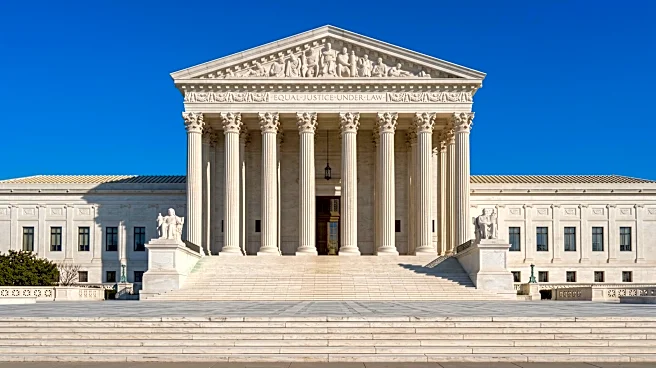
after New Jersey officials asked the Supreme Court to intervene in a legal dispute between prediction markets and state gambling regulators. States like New Jersey argue that platforms such as Kalshi should adhere to state laws governing sports betting, while prediction markets, supported by the Trump administration, contend they should be regulated under federal law. Kalshi's refusal to list a market on this specific case is due to its direct involvement, as actions by its legal team could influence the outcome, which the company deems a conflict of interest. Rival platform Polymarket has not yet indicated whether it will offer similar event contracts.
Why It's Important?
This development highlights a significant regulatory battle with broad implications for the burgeoning prediction market industry in the U.S. The core issue is whether these platforms fall under state-level sports betting regulations or federal oversight, a distinction that could drastically alter their operational landscape. A Supreme Court ruling in favor of state regulation could fragment the market, forcing platforms to comply with a patchwork of different laws across 50 states, potentially increasing operational costs and complexity. Conversely, a ruling for federal oversight could streamline regulation, fostering a more unified national market. The outcome will determine the scope of products prediction markets can offer, their growth potential, and the level of consumer protection and oversight they will face. This legal uncertainty could deter investment and innovation in a sector that has gained traction, particularly during the 2024 presidential election cycle.
What's Next?
New Jersey officials have escalated their legal challenge by asking the Supreme Court to weigh in on the split decisions from lower courts. The Third Circuit Court of Appeals previously ruled in favor of Kalshi, while the Ninth Circuit Court of Appeals issued an opposing opinion in a case involving Nevada. The Supreme Court will now decide whether to hear the case, a decision that will have profound consequences for Kalshi, Polymarket, and the entire prediction market industry. If the Supreme Court takes the case, its ruling will establish a precedent for how these platforms are regulated nationwide. Regardless of the Supreme Court's decision on hearing the case, the legal and regulatory landscape for prediction markets will remain a key area of focus for stakeholders, including other states, federal regulators, and the platforms themselves.
Beyond the Headlines
The conflict between state and federal regulation for prediction markets touches upon deeper questions about the nature of these platforms. Are they primarily gambling operations, akin to sports betting, or are they financial exchanges dealing in event contracts, deserving of a different regulatory framework? The Trump administration's backing of federal regulation suggests a view of prediction markets as financial instruments. The debate also raises ethical considerations regarding what types of events should be open to prediction markets, especially when the outcomes could be influenced by the participants themselves, as Kalshi's decision to abstain from its own case illustrates. The resolution of this regulatory ambiguity will not only shape the future of prediction markets but could also set precedents for how emerging digital financial instruments are classified and governed in the U.S.