

What's Happening?
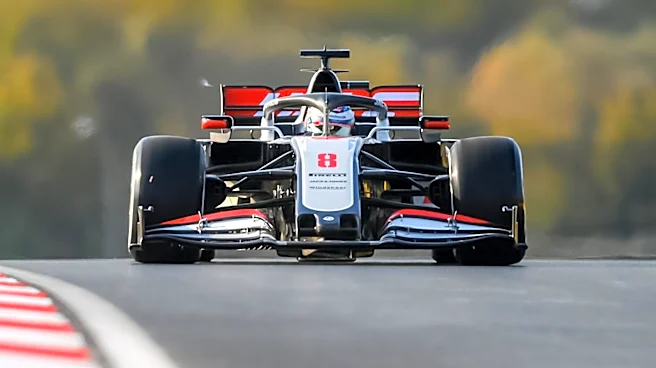
Toyota is preparing for the potential departure of its World Endurance Championship (WEC) driver, Ryo Hirakawa, who is a candidate for a Formula 1 seat with Haas for the 2027 season. Hirakawa has been testing a previous-generation Haas car and remains
in contention for the second seat alongside Oliver Bearman. Toyota's technical director, David Floury, confirmed that the team has a contingency plan in place, stating they are 'more or less covered' regardless of Hirakawa's decision. Floury emphasized Toyota's support for Hirakawa's career path. Other candidates for the Haas seat include Esteban Ocon, Jack Doohan, Leonardo Fornaroli, and Rafael Camara. Should Hirakawa move to F1, Esteban Masson, who is part of Toyota's driver development program and has tested their Hypercar, is emerging as a leading candidate to replace him in the WEC.
Why It's Important?
This development is significant for both the U.S.-based Haas Formula 1 team and the global motorsport landscape. For Haas, securing a driver like Hirakawa, who has extensive experience in single-seaters and endurance racing, could bring valuable expertise and a competitive edge to their 2027 F1 lineup. This move would also highlight Haas's growing relationship with Toyota, potentially opening doors for future collaborations or technical partnerships. For Toyota, while losing a key WEC driver is a challenge, their proactive contingency planning demonstrates strategic foresight in managing talent transitions. The potential promotion of Esteban Masson from their development program underscores the effectiveness of their driver pipeline, ensuring continuity and nurturing future talent. This driver market activity reflects the intense competition for top-tier talent in motorsport and the strategic decisions teams make to optimize their performance across different racing series.
What's Next?
Haas is expected to make a final decision on Oliver Bearman's teammate for the 2027 season in the coming months, with Ryo Hirakawa remaining a strong contender. Hirakawa will continue to focus on his current WEC commitments, with further discussions about his F1 prospects likely to follow after the upcoming Lone Star Le Mans race. Toyota will continue to monitor the situation and, if Hirakawa moves to F1, will likely promote Esteban Masson or another suitable candidate to fill his WEC seat. The driver market will remain active as teams finalize their lineups for the 2027 season across various motorsport categories. This period will involve strategic negotiations and evaluations to ensure competitive driver pairings for the future.
Beyond the Headlines
The potential transfer of Ryo Hirakawa from WEC to Formula 1 highlights the fluid nature of professional motorsport careers and the aspiration of many drivers to reach the pinnacle of racing. It also underscores the increasing cross-pollination of talent between different racing disciplines, where success in one series can open doors to another. For teams like Haas, attracting established talent from other categories can bring fresh perspectives and diverse skill sets, enriching the team's technical and strategic approach. Furthermore, the emphasis on driver development programs, as seen with Toyota's preparation of Esteban Masson, is crucial for the long-term sustainability of motorsport. These programs ensure a continuous supply of skilled drivers, fostering competition and innovation across all levels of racing. This dynamic interplay of talent acquisition and development shapes the competitive landscape of global motorsport.