


What's Happening?
In 1984, Marvel Comics released 'Marvel Super Heroes Secret Wars,' a groundbreaking crossover series that fundamentally altered the landscape of comic book publishing. Prior to this event, major crossovers were rare and typically focused on a single title
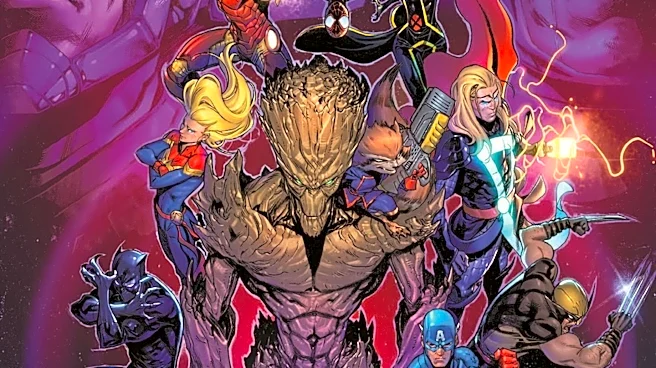
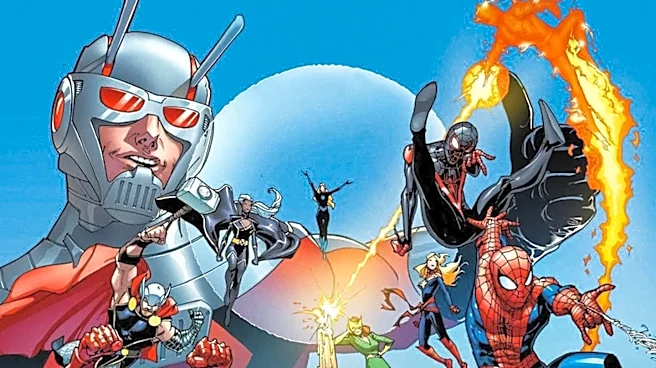
or a small group of characters. 'Secret Wars' distinguished itself by taking heroes and villains from across the entire Marvel Universe, including Spider-Man, the X-Men, the Hulk, the Avengers, Captain America, Iron Man, and the Fantastic Four, and forcing them to fight on a distant planet called Battleworld, orchestrated by a cosmic entity known as the Beyonder. The series was unique in that its immediate consequences, such as Spider-Man's new black costume and the Fantastic Four's lineup change, were revealed in individual character titles before the 'Secret Wars' miniseries itself fully explained their origins. This innovative approach created a sense of mystery and anticipation, changing how readers experienced ongoing comic narratives.
Why It's Important?
The 'Marvel Super Heroes Secret Wars' event is significant because it pioneered the concept of the 'site-wide crossover' in comic books, a format that has since become a staple of the industry for both Marvel and DC Comics. By disrupting the entire Marvel Universe and resetting major titles, it demonstrated the commercial and narrative power of large-scale, interconnected storylines. This event proved that readers were eager for stories that impacted all their favorite characters simultaneously, leading to a proliferation of similar events in subsequent decades. The changes introduced, such as Magneto's shift from villain to antihero and the introduction of Spider-Man's symbiote costume, had lasting impacts on character development and continuity. Its success laid the groundwork for future major crossovers like DC's 'Crisis on Infinite Earths' and Marvel's own 'Civil War' and 'House of M,' establishing a new paradigm for how comic book companies engage their readership and manage their expansive fictional universes.
What's Next?
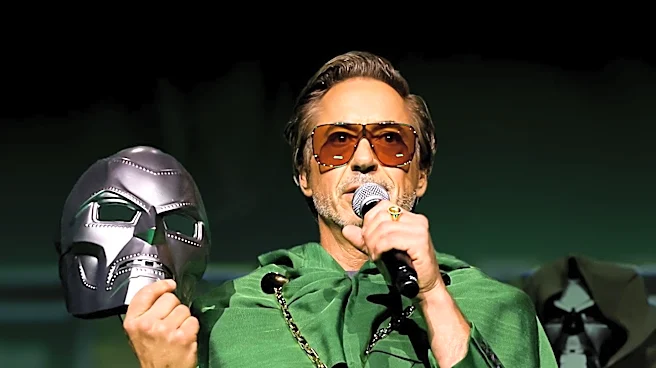
The legacy of 'Marvel Super Heroes Secret Wars' continues to influence comic book publishing, with major crossover events remaining a central feature of both Marvel and DC's annual schedules. The 2015 'Secret Wars' event, for instance, directly built upon the original 1984 series, demonstrating its enduring relevance. Future adaptations, such as the upcoming 'Avengers: Secret Wars' film, are expected to draw inspiration from both the 1984 and 2015 comic book events, indicating that the core concepts of multiversal conflict and character-altering consequences will persist. The original series' impact on character arcs, like Magneto's evolution and the introduction of the symbiote, continues to resonate in current comic book narratives and adaptations, ensuring its place as a foundational event in comic book history.
Beyond the Headlines
Beyond its immediate impact on sales and storytelling, 'Marvel Super Heroes Secret Wars' introduced a new level of meta-narrative engagement for comic book readers. By revealing the consequences of the event in individual titles before the main series concluded, Marvel created a unique interactive experience that blurred the lines between ongoing series and the central crossover. This approach fostered a deeper sense of mystery and encouraged readers to follow multiple titles to piece together the full story. The event also highlighted the commercial viability of large-scale narrative disruption, demonstrating that bold, universe-altering storylines could generate significant buzz and sales. This strategic shift in publishing not only redefined how comic books were created and consumed but also set a precedent for how serialized fiction could maintain reader interest through interconnected, high-stakes narratives.