
What's Happening?
Michael Leiters, CEO of Porsche, has publicly criticized Tesla's approach to vehicle unveilings, specifically referring to them as 'effects and shows.' Leiters made these comments during a conference in Berlin, contrasting Porsche's focus on 'tangible
tech innovations' with Tesla's dramatic demonstrations. Both automakers unveiled new vehicle concepts on October 15. Tesla's demonstration of its Roadster involved the vehicle speeding up a ramp, reaching 60 mph in under a second, flipping midair, and landing safely using compressed-air thrusters. Leiters stated that Porsche aims to 'completely steer clear from any kind of effects and shows,' emphasizing a different customer target and a focus on engineering substance with their Mission S concept.
Why It's Important?
This public critique from a prominent luxury automaker CEO highlights a fundamental divergence in marketing and product development philosophies within the electric vehicle (EV) industry. Porsche's emphasis on 'tangible tech innovations' and a more traditional approach to showcasing its vehicles contrasts sharply with Tesla's strategy of generating social media buzz through spectacular, futuristic demonstrations. This difference in approach could influence consumer perceptions and market segmentation within the high-end EV market. While Tesla aims to appeal to a broader audience with its futuristic vision and autonomous driving capabilities, Porsche appears to be reinforcing its brand identity around engineering excellence and a more refined driving experience. The competition between these two companies, particularly in the luxury and performance EV segments, will likely shape future trends in automotive design, technology, and marketing.
What's Next?
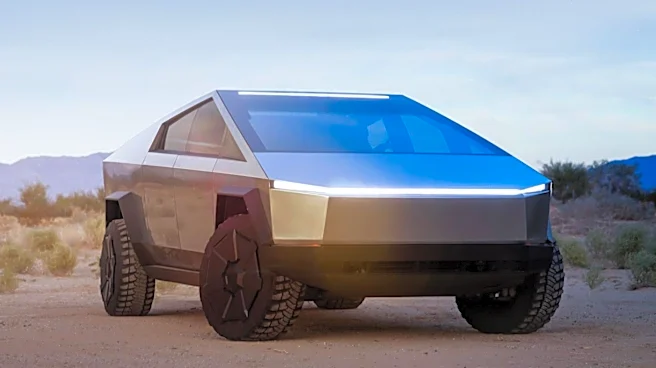
The contrasting strategies of Porsche and Tesla are likely to continue, with each company refining its approach based on market response and competitive pressures. Porsche will likely continue to focus on developing vehicles that emphasize performance, luxury, and established automotive engineering, as exemplified by its Mission S concept. Tesla, on the other hand, is expected to further lean into autonomous vehicle offerings, robotics, and artificial intelligence, as it shifts focus from Cybertruck production to its self-driving Cybercab. The ongoing competition between these two influential automakers will drive innovation and potentially lead to a more diverse range of electric vehicle options for consumers, catering to different preferences for technology, performance, and brand experience. The market will observe which strategy proves more effective in capturing market share and defining the future of the automotive industry.
Beyond the Headlines
The 'effects and shows' versus 'tangible tech innovations' debate extends beyond mere marketing tactics; it reflects differing philosophies on the role of technology and spectacle in modern product development. Tesla's approach, often characterized by ambitious claims and dramatic reveals, taps into a cultural fascination with futuristic possibilities and disruptive innovation. This can generate immense public interest and investor enthusiasm, even if some technologies are still in early stages. Porsche's stance, conversely, underscores a more conservative, incremental approach to innovation, prioritizing proven engineering and a focus on immediate, practical benefits for the driver. This philosophical divide could influence how other industries approach innovation and marketing, balancing the allure of groundbreaking, yet unproven, technologies with the reliability and demonstrable value of established engineering. It also raises questions about the long-term sustainability of 'hype-driven' product launches versus a steady, quality-focused development cycle.