






What's Happening?
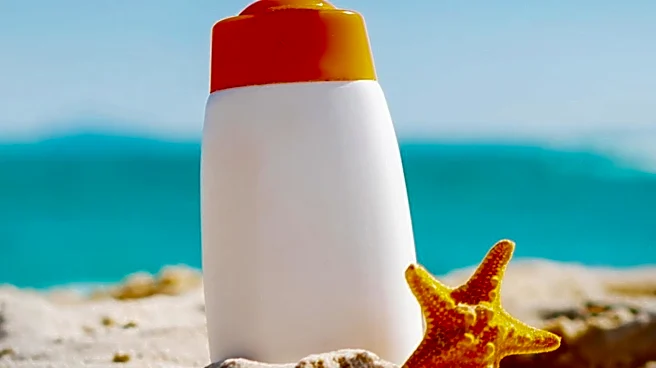
The U.S. Food and Drug Administration (FDA) has approved bemotrizinol, a new sunscreen ingredient, after two decades of testing. Bemotrizinol is a broad-spectrum chemical UV filter that protects against both UVA and UVB rays, which are known to cause
skin cancer, premature aging, and sunburn. This approval marks a significant development in the U.S. sunscreen market, which has been criticized for lacking effective sunscreen filters. Bemotrizinol is already widely used in Europe and Asia, and its stability in heat and sunlight makes it a promising addition to American sunscreens. The ingredient will be marketed under the brand name Parsol Shield by DSM-Firmenich, which has exclusive marketing rights for 18 months.
Why It's Important?
The approval of bemotrizinol is a major advancement for the U.S. sunscreen industry, which has lagged behind other countries in offering effective UV protection. This new ingredient addresses the shortcomings of avobenzone, a common filter in American sunscreens that degrades in sunlight. With bemotrizinol, consumers can expect more reliable and long-lasting sun protection. Dermatologists are optimistic that this will encourage more consistent sunscreen use, as bemotrizinol allows for formulations that are both effective and cosmetically appealing. This could lead to a reduction in skin cancer rates and better skin health overall.
What's Next?
Products containing bemotrizinol are expected to hit U.S. shelves by early fall. As the ingredient gains popularity, it may prompt other sunscreen manufacturers to innovate and improve their formulations. The FDA's approval could also influence regulatory practices, potentially leading to faster approval processes for other beneficial ingredients. Consumers and dermatologists alike will be watching closely to see how bemotrizinol performs in the market and whether it lives up to its promise of superior sun protection.