







What's Happening?
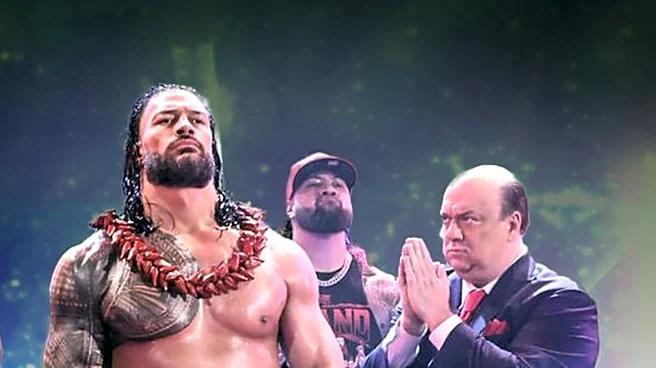
Eric Bischoff, during an episode of '83 Weeks,' expressed his disagreement with Paul Heyman's recent revelation about coaching Roman Reigns to fully embody his 'Tribal Chief' character. Heyman had disclosed on 'Six Feet Under' that he guided Reigns into
a method acting approach, living the character 24/7. While Bischoff praised the effectiveness of this method, comparing it to the commitment of legends like Hulk Hogan and Ric Flair, he questioned the decision to make this process public. Bischoff believes that revealing such details diminishes the mystique and aura surrounding a high-profile character like Roman Reigns, which he considers essential for the long-term appeal of professional wrestling.
Why It's Important?
This discussion highlights a fundamental tension within professional wrestling: the balance between maintaining kayfabe (the illusion of reality within the sport) and providing behind-the-scenes insights. For decades, the mystique of wrestling characters was carefully guarded, contributing significantly to their larger-than-life appeal and fan engagement. Bischoff's argument suggests that by pulling back the curtain on the creative process, especially for a top-tier character like Roman Reigns, the industry risks eroding the very mystery that fuels fan curiosity and investment. This debate has implications for how wrestling promotions manage their talent and narratives, influencing decisions on what information is shared with the public and how it might impact the perceived authenticity and excitement of the product. The long-term health of the industry, according to Bischoff, relies on preserving a degree of unknown around its stars.
What's Next?
The ongoing debate about maintaining wrestling's mystique versus transparency will likely continue to influence how promotions and performers interact with their audience. While some argue for more behind-the-scenes content to engage modern fans, others, like Bischoff, advocate for preserving the traditional elements of illusion. Future decisions by WWE and other promotions regarding documentary content, interviews, and social media strategies will reflect this ongoing tension. Performers themselves may become more conscious of how their public statements impact their character's perception. The industry will need to continually assess how much 'reality' to inject into its 'sports entertainment' product to keep fans invested without sacrificing the magic that makes wrestling unique.
Beyond the Headlines
Bischoff's comments delve into the broader philosophical underpinnings of performance and storytelling in entertainment. He draws a parallel between method acting in traditional theater and 'living the gimmick' in wrestling, suggesting that both require deep commitment to character. However, he argues that wrestling, unlike other forms of entertainment, benefits from a degree of deliberate ambiguity regarding its reality. This raises questions about the nature of audience engagement in different media: do audiences prefer to be fully immersed in a fictional world, or do they seek a more transparent, 'insider' view? The discussion also touches on the commercial value of mystique; by demystifying a character, a promotion might inadvertently reduce its long-term appeal and profitability. This highlights the delicate art of crafting and sustaining compelling narratives in a performance-based industry.