







What's Happening?
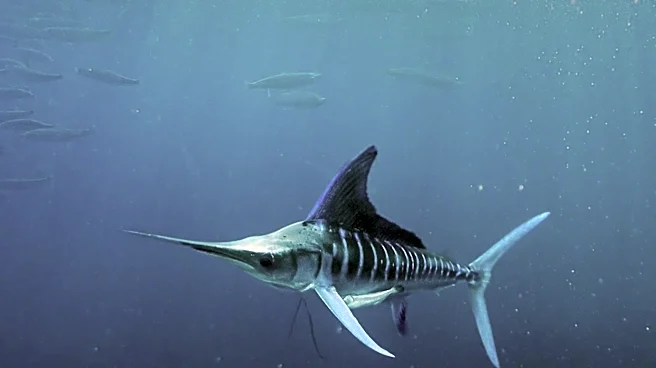
Captain Damon Sacco and his client Walter Chapman landed a 1,260-pound Atlantic blue marlin off the coast of Massachusetts, which they and others believe to be the largest ever caught off the U.S. East Coast. The massive billfish, measuring over 11 feet
in length, was caught on Wednesday after a three-hour battle on rod and reel in Atlantis Canyon, an underwater canyon about 100 miles off Cape Cod. The fish was just 142 pounds shy of the world record for an Atlantic blue marlin, set in 1992 off Brazil. Walt Golet, director of the University of Maine Pelagic Fisheries Lab, noted the rarity of such a large catch in New England waters due to the typically cold temperatures. The marlin's head is being sent to the UMaine lab to determine its age, which Golet estimates could be between 25 and 30 years.
Why It's Important?
This extraordinary catch is a significant event in the world of sport fishing and marine biology. It highlights the presence of exceptionally large marine life in U.S. East Coast waters, which is particularly noteworthy given the typical temperature constraints for blue marlin in the Northeast. The potential record-breaking nature of the catch could draw increased attention to the region's marine ecosystems and the health of its fish populations. For the fishing community, it represents a monumental achievement and a testament to the skill and perseverance of the anglers. Scientifically, the study of the marlin's age and other biological data will provide valuable insights into the species' life cycle and migratory patterns in the Atlantic.
What's Next?
The marlin's head is being sent to the University of Maine Pelagic Fisheries Lab for age determination, which will provide scientific data on this remarkable specimen. The official verification process for the U.S. East Coast record will likely involve reviewing the catch details and comparing them against existing records. The event is expected to generate considerable interest within the sport fishing community and among marine enthusiasts. Discussions about the health of Atlantic blue marlin populations and the impact of climate on their migratory patterns may also arise, especially given the unusual size of the fish caught in New England waters.
Beyond the Headlines
The capture of such a massive blue marlin sparks broader conversations about marine conservation and the impact of human activities on ocean ecosystems. While a triumph for sport fishing, it also brings into focus the delicate balance of marine life and the challenges of preserving large pelagic species. The rarity of such a large marlin in these waters could be an anomaly or a subtle indicator of shifting ocean conditions, potentially linked to climate change affecting marine habitats and species distribution. This event serves as a reminder of the ocean's vast and often mysterious depths, and the ongoing need for scientific research and responsible fishing practices to ensure the sustainability of these magnificent creatures for future generations.