







What's Happening?
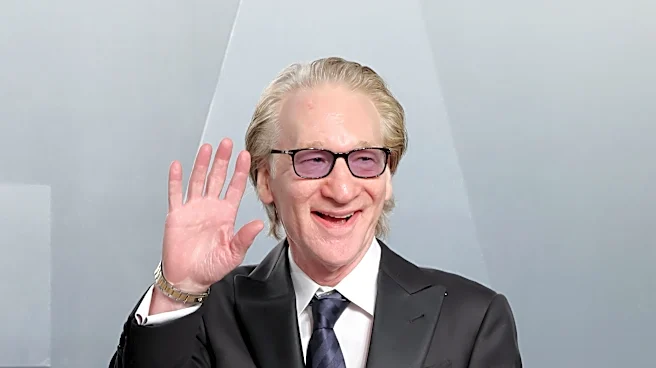
On the Season 24 finale of 'Real Time with Bill Maher,' Bill Maher addressed two significant cultural phenomena: the release of 'Grand Theft Auto VI' (GTA VI) and the casting of Robert Pattinson as James Bond. Maher expressed fascination with GTA VI's
multi-billion dollar opening, noting that it surpassed any movie's performance. He highlighted that approximately one-fifth of young men in America reportedly stayed home from work to play the game on its release day, leading him to quip that it caused more workplace absences than ICE. Maher also commented on the game's content, finding it 'disturbing' that players often choose to engage in criminal activities within the game, such as 'smacking the hooker with the car antenna,' rather than being a 'good boyfriend.' Shifting to the James Bond casting, Maher praised Amazon MGM Studios' choice of Robert Pattinson, describing him as 'perfect' for the role and emphasizing that James Bond should be a 'grown ass man' and a 'very heterosexual male.' He stated he would have been open to a Black James Bond but not a woman or lesbian James Bond, as that would fundamentally alter the character.
Why It's Important?
Maher's commentary on 'Grand Theft Auto VI' underscores the growing influence of the video game industry on American society and the economy. The reported widespread absenteeism due to the game's release highlights potential implications for workforce productivity and employer policies, particularly in sectors employing a younger demographic. The game's record-breaking financial success also signals a significant shift in entertainment consumption, with video games now rivaling or even surpassing traditional media like movies in terms of immediate economic impact. His remarks on the game's content, particularly the choice of criminal activities, touch upon broader societal discussions regarding the influence of violent video games on player behavior and moral perceptions. Furthermore, Maher's strong opinions on the James Bond casting reflect ongoing debates within the entertainment industry and among audiences about character integrity, representation, and the evolution of iconic roles. His stance on James Bond's gender and sexuality, while controversial, illustrates the cultural sensitivities surrounding established franchises and the challenges faced by studios in balancing tradition with modern expectations.
What's Next?
The 'Real Time with Bill Maher' Season 24 finale marks a temporary hiatus for the show, with its Season 25 return scheduled for January 15. The discussions initiated by Maher regarding 'Grand Theft Auto VI' are likely to continue within broader cultural and industry conversations. The immense financial success of GTA VI will undoubtedly influence future game development strategies and investment in the video game sector, potentially leading to more large-scale, immersive releases that could further impact work-life balance and entertainment consumption patterns. The debate surrounding the casting of Robert Pattinson as James Bond, and Maher's specific comments on the character's identity, will likely persist as Amazon MGM Studios moves forward with the new 007 film. These discussions will continue to shape public perception and critical reception of the franchise, influencing future casting decisions and narrative directions for iconic characters in Hollywood.
Beyond the Headlines
The phenomenon of 'Grand Theft Auto VI' causing widespread workplace absences points to a deeper societal trend of blurring lines between work and leisure, particularly with the rise of immersive digital entertainment. This could prompt businesses to re-evaluate flexible work policies or consider the impact of major entertainment releases on employee engagement and attendance. The game's content, which allows players to engage in morally ambiguous or criminal acts, also raises ethical questions about the nature of virtual escapism and its potential desensitizing effects, even if purely fictional. Maher's comments on James Bond delve into the cultural ownership of fictional characters and the tension between artistic interpretation and audience expectations. The insistence on certain immutable characteristics for iconic figures reflects a broader cultural struggle over tradition versus progressive representation in media. This ongoing dialogue highlights the power of established narratives and the challenges of adapting them for contemporary audiences without alienating long-standing fan bases, while also sparking important conversations about diversity and inclusion in popular culture.