




What's Happening?
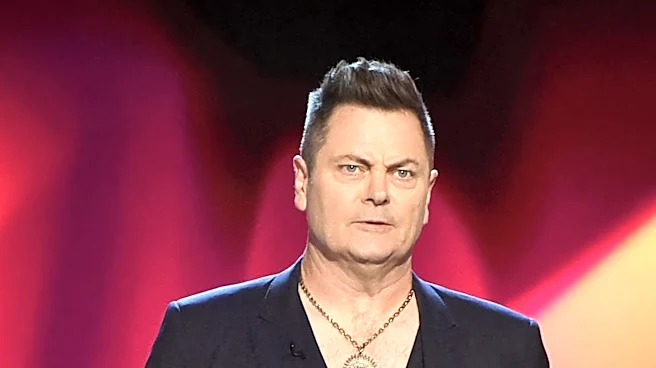
Nick Offerman is set to star in the upcoming film 'Under the Lights,' which addresses the stigma surrounding epilepsy. The movie tells the story of Sam, a teenager who attends prom despite knowing the lights could trigger a seizure, driven by a desire
to experience a normal life. Written and directed by Miles Levin, who himself lives with epilepsy, the film aims to raise awareness and challenge misconceptions about the condition. Offerman will appear alongside Pearce Joza, Lake Bell, Randall Park, and Mark Duplass. The project originated from a short film that garnered significant attention and contributed to a global movement advocating for an end to epilepsy stigma. An advance screening and discussion of the film are scheduled, featuring a conversation with Levin led by Dr. Joe Servin.
Why It's Important?
This film is important because it tackles a significant health and social issue: the stigma associated with epilepsy. By featuring a well-known actor like Nick Offerman, the project gains a broader platform to reach audiences who might not otherwise engage with this topic. The narrative, rooted in the personal experience of director Miles Levin, offers an authentic portrayal of living with epilepsy, which can foster empathy and understanding. Reducing stigma can lead to improved quality of life for individuals with epilepsy, encouraging open dialogue, better support systems, and potentially influencing public policy regarding accessibility and discrimination. For the entertainment industry, it highlights a growing trend of using storytelling to address health challenges and promote social awareness, potentially inspiring more inclusive narratives.
What's Next?
Following its advance screening, 'Under the Lights' is expected to be released to a wider audience, though specific distribution details were not provided. The film's impact will likely extend beyond its initial release, potentially sparking further discussions and educational initiatives about epilepsy. The involvement of Dr. Joe Servin in post-screening discussions suggests an ongoing effort to combine entertainment with medical and social education. The film's success could encourage more filmmakers to explore health-related stigmas, leading to a greater variety of inclusive stories in mainstream media. Advocacy groups for epilepsy awareness will likely leverage the film to further their campaigns, aiming to shift public perception and support for those affected by the condition.
Beyond the Headlines
The film's exploration of epilepsy stigma touches upon deeper societal issues concerning disability and acceptance. Often, conditions like epilepsy are misunderstood, leading to social isolation, discrimination, and psychological distress for those affected. 'Under the Lights' has the potential to challenge these ingrained biases by humanizing the experience of living with a neurological condition. It can serve as a cultural touchstone, prompting audiences to reflect on their own perceptions and biases towards individuals with disabilities. Furthermore, the film's origin from a short film that sparked a global movement underscores the power of personal narratives in driving social change and advocacy, demonstrating how art can be a catalyst for addressing complex health and human rights issues.