






What's Happening?
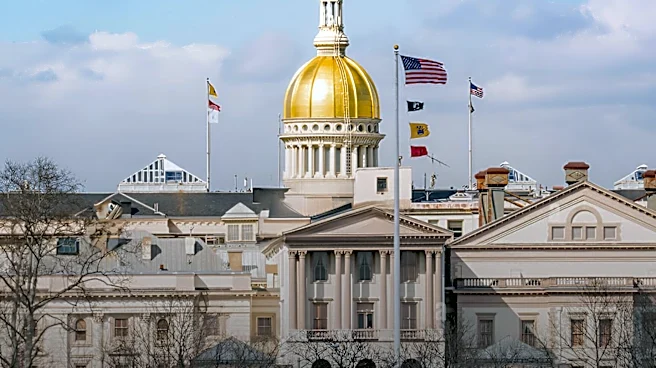
New Jersey has emerged as a significant destination for film and television production, attracting major studios with aggressive tax credits. The state's film spending reached $1.2 billion by 2025, positioning it behind only California, New York, and Georgia.
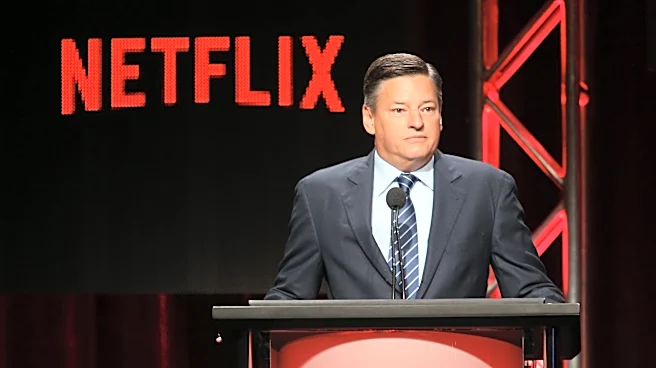
This resurgence is a result of state leaders implementing transferable tax credits of up to 35% for companies filming in New Jersey, a program bolstered in 2018. Unlike California, New Jersey includes a portion of actor salaries in its tax credit calculations and does not require filming in a certified stage to qualify. This strategy has led to nearly three dozen major films and TV projects being produced in the state in 2025, double the count from five years prior. Notable productions include Walt Disney's Searchlight Pictures' Bob Dylan biopic "A Complete Unknown" and Universal Pictures' "Disclosure Day." The state has also granted preferential 'studio partner' status to Netflix, Paramount, and Lionsgate, offering them a 40% base tax credit for a 10-year commitment and access to an additional $150 million annually in incentives. Netflix is currently building a $1 billion studio complex at Fort Monmouth, a former U.S. Army base, with up to $387 million in state taxpayer support.
Why It's Important?
New Jersey's aggressive push to attract film and television production signifies a significant shift in the U.S. entertainment industry landscape. By offering competitive tax incentives and streamlining permitting processes, the state is directly challenging traditional production hubs like California and New York. This move creates thousands of jobs, particularly 'below-the-line' positions in areas such as trucking, carpentry, set design, hair and makeup, and catering, benefiting local economies. The development of large studio complexes by companies like Netflix and Lionsgate also establishes long-term infrastructure, fostering a sustainable industry. This trend highlights how state-level economic policies, specifically tax credits, can dramatically influence industry relocation and growth, impacting employment, local businesses, and real estate markets. The competition for film production dollars also puts pressure on established states to re-evaluate their own incentive programs to retain business.
What's Next?
New Jersey's film industry is poised for further growth with the anticipated completion of major studio projects. Great Point Studios, in partnership with Lionsgate Films, is expected to complete its first phase by June, while Netflix's Fort Monmouth complex is slated for its first phase completion by next fall. These new facilities will address the current shortage of studio space, which has previously pushed some projects to New York. Additionally, French hedge fund manager Arpad Busson plans to build 1888 Studios, a $1.2 billion film and TV complex, with Paramount as an anchor tenant, aiming to open in 2029. The state has extended its tax incentive program to 2049, signaling a long-term commitment to the industry. This sustained investment and infrastructure development are expected to continue attracting productions and jobs, further solidifying New Jersey's position as a major player in the U.S. film and television sector.
Beyond the Headlines
The revival of New Jersey's film industry carries deeper implications beyond economic growth. It represents a historical full circle, as the state was the birthplace of moviemaking with Thomas A. Edison's laboratory in West Orange. The current success, driven by tax incentives, ironically mirrors the historical reasons for the industry's departure to Hollywood—avoiding Edison's licensing fees. This dynamic underscores the cyclical nature of economic development and the powerful role of financial incentives in shaping industrial geography. Furthermore, the transformation of former military bases and decayed urban districts into modern studio campuses highlights urban renewal and adaptive reuse strategies. The influx of film production also challenges existing perceptions of New Jersey, moving beyond its 'Sopranos'-era typecasting to showcase its diverse landscapes and cultural offerings, potentially boosting tourism and regional identity.